Snacks Vending Machine for Office vs Micro-Market vs Staffed Counter: Which Fits Your Team?
A snacks vending machine for office use works best for teams under about 100 people, or any floor with little spare space. A micro-market suits 150 or more people in a secure, closed office. A staffed counter suits teams that want fresh snacks, tea and coffee, and tight control over subsidies.
These numbers are rules of thumb, not hard limits. A hybrid office with 120 people on the payroll may see only 60 on a normal day, so size the setup on who actually turns up. Get it right and nobody notices. Get it wrong and you see empty spirals, a half-stocked shelf or a queue at the counter.
Most top guides on this topic compare vending machines with micro-markets and stop there. They are also written for operators who sell machines, not for the facility manager choosing a snacks vending machine for office floors. This guide adds the third option, the staffed counter. It matches each format to headcount, space and upkeep, and it covers what changes in India, from UPI payments to FSSAI checks on your vendor.
It is written for facility, admin and HR leads who run an office of 50 to 1,000 people. Read on for a side-by-side table, a clear call on when each option wins, the cost factors that matter, and a simple way to combine them.
Key Takeaways
- A snacks vending machine for office use fits small teams and tight spaces. Locked stock keeps theft and waste low.
- A micro-market suits a closed, secure office of about 150 or more people. It needs more space and daily restocking.
- A staffed counter suits offices that want fresh food, hot drinks and subsidy control. You pay for staff.
- Size the choice on average daily attendance, not total headcount.
- Hybrid setups often win: one main format, plus small machines at satellite spots.
What Are the Three Ways to Offer Snacks in an Office?
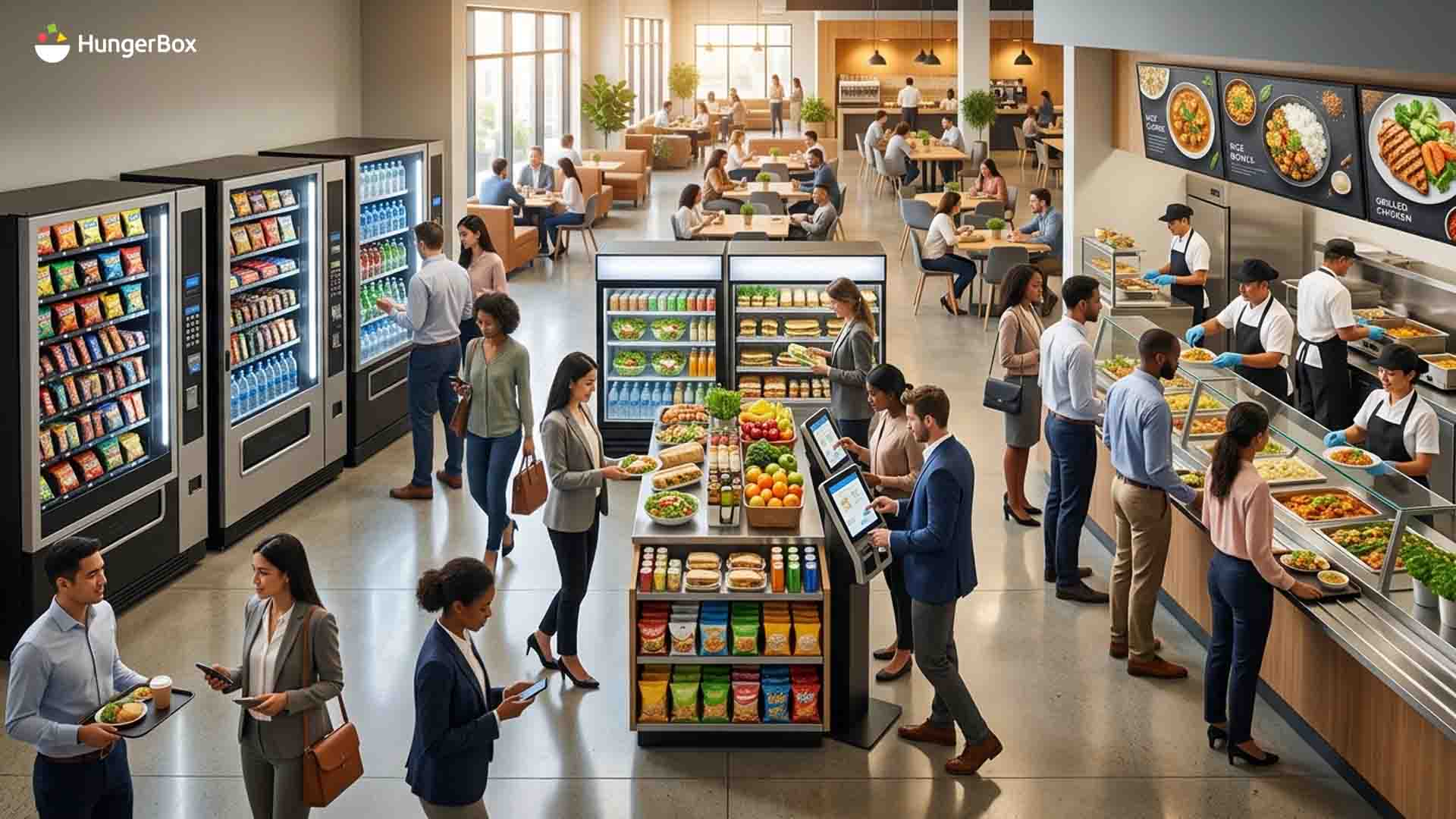
An office can offer snacks through a vending machine, a micro-market or a staffed counter. A vending machine is a locked unit that dispenses packaged items after payment. A micro-market is an open-shelf store with self-checkout. A staffed counter is a manned stall that serves snacks, tea and coffee.
Snack vending machine
A snack vending machine holds packaged items in locked spirals and releases one after payment. It needs little space and little supervision. The range is limited to long-life products such as chips, biscuits and bars. A combo unit adds cold drinks.
Micro-market
A micro-market is a small self-service shop inside the office. Products sit on open shelves and in coolers, and employees pay at a self-checkout kiosk. The range is wider and can include fresh food. But nothing physically stops someone leaving without paying, so the format relies on trust and cameras.
Staffed snack counter
A staffed counter is a stall run by a vendor or your own team. A person serves snacks, tea, coffee and simple fresh items, and bills each order. It costs more to run than a machine, but it handles fresh food, special requests and meal subsidies well.
How Do a Snacks Vending Machine, Micro-Market and Staffed Counter Compare?
A vending machine wins on low supervision and low theft risk. A micro-market wins on range and fresh food. A staffed counter wins on service, hot items and subsidy control. The table compares all three on the factors facility teams ask about most.
| Factor | Snack vending machine |
Micro-market |
Staffed counter
|
| Best-fit headcount (guidance) | Under about 100, or satellite spots | About 150+ in a secure office | About 100 to 500 |
| Space needed | One machine footprint | A spare room or large break area | A counter plus a small prep area |
| Product range | Packaged, long-life items | Wide, including fresh food | Wide, including hot and fresh items |
| Restocking | Every few days, based on sales |
Daily, so shelves look full |
Daily, handled by the vendor |
| Theft and shrinkage | Low, stock is locked | Higher, relies on trust and cameras | Low, staff control stock |
| Staff on site | None | None, but a daily restock visit | Counter staff |
| Payment | Cashless reader (UPI, card) | Self-checkout kiosk | Counter billing or app |
| Running cost | Low | Medium to high | Medium to high |
| Subsidy tracking | Needs a linked payment system | Needs a linked payment system | Easy to bill per employee |
Ratings and headcounts are guidance based on typical office setups. The micro-market figure echoes the 150 to 200+ people that US operator Cantaloupe cites for a closed-loop workplace.
When Is a Snacks Vending Machine for Office Use the Right Choice?
A snacks vending machine for office use is the right choice when your team is small, space is tight or you want a low-effort setup. Locked stock keeps theft close to zero, and no one has to staff it.
It also suits places where people pass quickly, such as lobbies, corridors and second floors. Restocking can follow sales data, so a visit every few days is often enough. The trade-offs are a limited range and the occasional stuck item.
- Choose it if: fewer than about 100 people use the floor, you have a corner rather than a room, and no one wants to run a counter.
- Skip it if: people ask for fresh or hot food every day, or you need to bill snacks against an employee subsidy.
When Does a Micro-Market Make Sense?
A micro-market makes sense in a closed, secure office with about 150 or more regular users, a spare room or large break area, and real demand for fresh food. Open shelves give wider choice, but the format depends on trust, cameras and daily restocking.
The upside is spend. Cantaloupe data, cited by VMFS USA, shows consumers spent 53% more at micro-markets than at vending machines in 2024. That upside comes with costs: daily service, fresh-food waste and some theft. Offices with high staff turnover or many visitors feel the theft cost most.
- Choose it if: your office is secure, headcount is steady and you have space for shelves, coolers and a checkout kiosk.
- Skip it if: you have fewer than about 150 regular users, open public access or no one to own the daily restock.
When Should You Choose a Staffed Counter?
Choose a staffed counter when you want fresh snacks, hot drinks and personal service, or when you need to bill snacks against an employee subsidy. A person at the counter controls stock and portions, so theft stays low. The trade-off is wages and a vendor you must trust.
A counter also handles what machines can't: made-to-order items, special diets and one-off requests. It sits neatly between a pantry and a full cafeteria. If you add a kitchen later, the counter can become the first station of a bigger setup.
Once a queue forms, ordering and billing tools start to matter. HungerBox's corporate cafeteria management platform lets employees order by app, QR code or kiosk, and gives managers daily sales reports.
- Choose it if: you have 100 to 500 people, want fresh or hot items, and run meal benefits.
- Skip it if: you only need packaged snacks, or the floor is too small to host a counter.
Which Option Fits Your Headcount?
Match the format to average daily on-site headcount. Under 100 people, use vending machines. From 100 to 200, use a staffed counter or a vending bank. From 200 to 500, use a counter or a micro-market in a secure office. Above 500, snacks alone stop being enough. These bands are guidance, not rules.
Under 100 people
One or two combo vending machines cover most needs. If people also want a proper lunch, read our guide on pantry, office cafeteria or food court setups before you build anything.
100 to 200 people
A staffed counter or a small bank of machines works well here. A micro-market becomes possible near 150 people if the office is secure and you have a spare room. Compare restocking effort with actual footfall first.
200 to 500 people
A micro-market gives the most choice in a closed office. A staffed counter gives fresh food and subsidy control. Many offices at this size run one of each.
500+ people or shared campuses
You are in cafeteria or food court territory. Machines and counters then work as extras at satellite points, such as other floors or tower lobbies.
What Drives the Running Cost of Each Option?
Running cost depends on four things: how often you restock, how many people you staff, how much fresh food you waste and how much stock goes missing. Each format leans on these differently.
- Snack vending machine: the main costs are the machine, bought or leased, and restocking. Staff cost is close to zero.
- Micro-market: more equipment, daily restocking, fresh-food write-offs and some shrinkage.
- Staffed counter: wages, the vendor's margin and waste on fresh items.
Ask every supplier for both a purchase quote and a lease quote, and ask who pays for servicing. The visible price is rarely the full cost, so read our note on the hidden costs of running an office cafeteria before you sign.
What Changes for Offices in India?
Three things shape the choice in India: cashless payment, food safety licensing and subsidy tracking. UPI has driven the growth of vending, any food vendor needs an FSSAI licence, and employee meal benefits need billing by employee.
India had an estimated 358,000 installed vending machines in 2025, up 24% on the year before, according to Next Move Strategy Consulting. Vendiman's founder credits UPI for that growth, so check that any machine's reader takes UPI reliably.
Ask each vendor for their FSSAI licence, GST registration and local trade licence. If you give employees a food allowance, review the rules too. Our note on food coupons under the new tax regime covers what changed for employers in FY 2026-27.
Can You Combine Vending Machines, Micro-Markets and Counters?
Yes. Many offices run one main format and add small machines at satellite spots. A micro-market or staffed counter in the main break area handles variety and fresh food. Vending machines in lobbies, corridors and other floors catch quick purchases from people who won't walk that far.
Operators also start with machines and add a micro-market later, once footfall justifies it. Whichever mix you pick, run one payment and reporting system across all of it. Then subsidies, stock levels and sales data stay in one place.
How Do You Keep Any Setup Stocked and Tracked?
Set a par level for each item, deduct stock at every sale and review a low-stock list each morning. Whatever the format, tracking shows what sells, what is about to expire and what goes missing. Our guide to snack and beverage inventory tracking walks through the steps.
HungerBox's product suite includes an inventory and sales dashboard for counters. Its corporate page also lists smart vending machines and self-ordering kiosks among its hardware integrations.
Conclusion: Match the Setup to Your Team
The right snack setup is the one your team stops noticing. Pick a snacks vending machine for office floors under about 100 people or where space is tight. Pick a micro-market for a secure office of 150 or more. Pick a staffed counter when you want fresh food and subsidy control. Size it on average daily attendance and track stock from day one.
If you want a view based on your own headcount and floor plan, talk to the HungerBox team.

Frequestly Asked Questions

There is no fixed minimum, but a machine needs steady footfall to pay for itself. As guidance, one or two machines suit teams up to about 100 people. A very small office may not buy enough to justify one, so start with a single combo unit and watch sales.
Only in the right office. A micro-market offers more choice and fresh food, and employees spend more there. It needs about 150 or more regular users, more space, daily restocking and a secure, trusting environment. Below that size, a vending machine usually costs less to run.
A micro-market is unstaffed. Employees take items from open shelves and pay at a self-checkout kiosk. A staffed counter has a person who serves and bills each order. The counter handles hot items and subsidies more easily. The micro-market saves labour but relies on trust.
Many do, and UPI is widely credited with driving vending growth in India. Check that the reader works on your network and that sales data reaches your reports. If you subsidise snacks, ask whether payments can be linked to employee IDs.
Yes, and many do. A micro-market or counter in the main break area gives variety and fresh food. Vending machines in lobbies and on other floors catch quick purchases. One software platform across all of them keeps stock and sales data in one place.