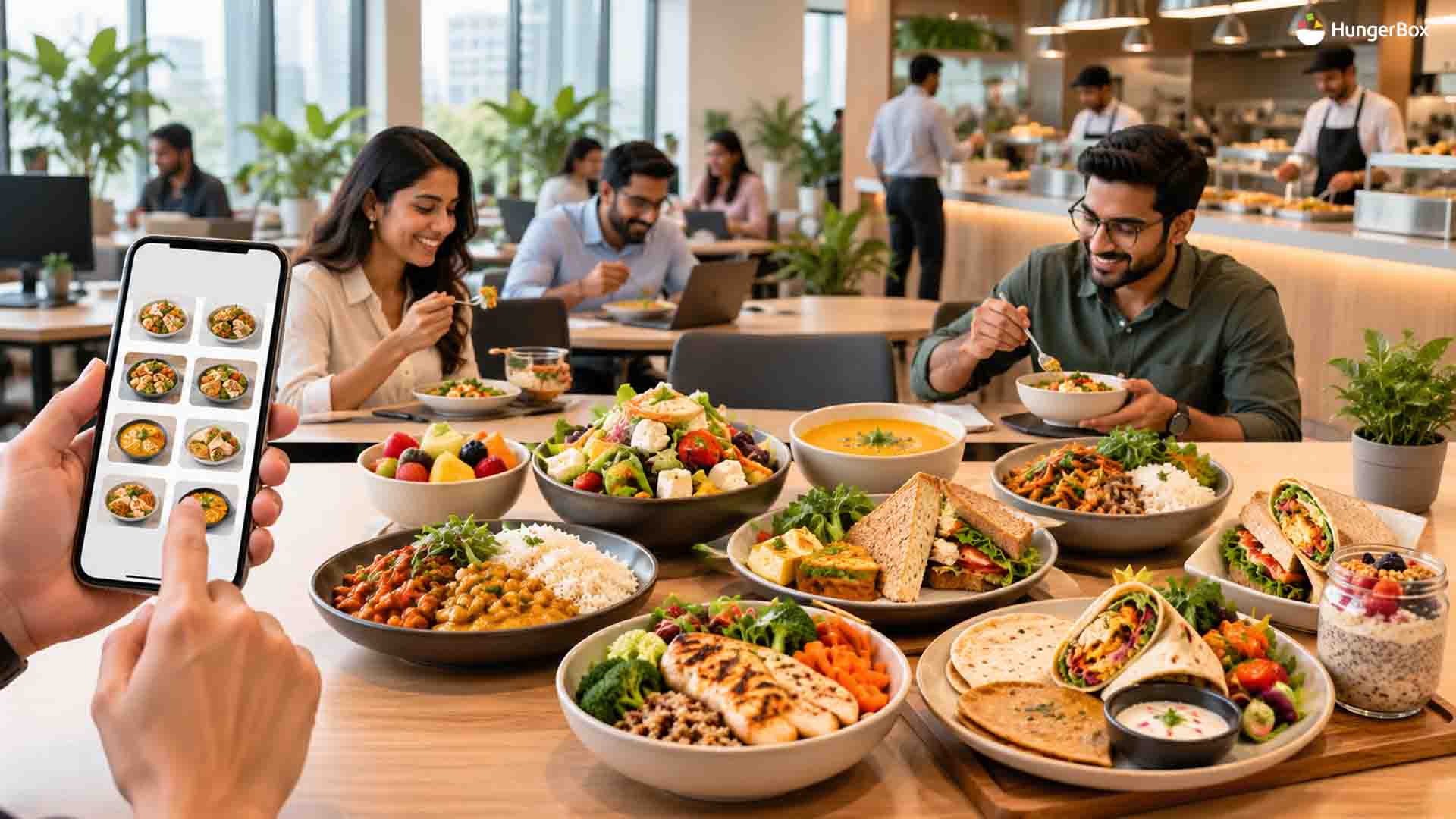
Healthy Lunch Ideas for Office-Goers: 10 Combos a Cafeteria Can Actually Serve
A healthy office lunch is a balanced plate: half vegetables, a protein, a whole-grain or millet base and a small portion of fat. In an Indian cafeteria that can be dal, sabzi, roti and curd, or a vegetarian protein bowl. The best healthy lunch ideas are the ones people repeat, so taste and price matter as much as nutrition.
Most healthy-eating advice is written for home kitchens. A cafeteria has different limits: hundreds of plates in one hour, a fixed subsidy, many dietary needs and a vendor who must make a margin. A salad that works in a magazine can sit untouched at a counter.
This guide is for cafeteria managers, HR teams and employees who want better lunches without a menu overhaul. You will get ten combinations that suit Indian office kitchens, a simple plate rule, swaps that cost little, and tips to get people to try them. The nutrition notes are general guidance, not medical advice. If you design menus for a specific health programme, work with a qualified dietitian.
What makes a lunch healthy?
A healthy lunch gives you steady energy, enough protein, plenty of fibre and moderate oil and salt. The plate rule is an easy shortcut: fill about half with vegetables or salad, a quarter with protein and a quarter with grains or millets.
This rule is a common guide, not a prescription. Portion needs differ by age, activity and health condition.
What are 10 healthy lunch ideas for an office cafeteria?
Each idea below uses ingredients Indian kitchens already stock. Prices vary, so we describe cost level, not rupee figures.
| S.no | Lunch idea | What is on the plate |
Protein source |
Cost level |
| 1 | Dal, sabzi and roti thali | Moong or toor dal, seasonal sabzi, two rotis, curd, salad | Dal and curd | Low |
| 2 | Rajma or chole bowl | Beans or chickpeas, brown or red rice, cucumber salad | Pulses | Low |
| 3 | Paneer tikka salad bowl | Grilled paneer, mixed greens, sprouts, lemon dressing | Paneer | Medium |
| 4 | Millet khichdi with kadhi | Mixed millet and dal khichdi, light kadhi, papad | Dal and millet | Low |
| 5 | Sprout and veg wrap | Whole-wheat wrap, sprouts, vegetables, mint chutney | Sprouts | Low |
| 6 | Egg curry with roti | Egg curry, two rotis, salad, dal on the side | Eggs | Low to medium |
| 7 | Grilled chicken plate | Grilled chicken, sauteed vegetables, jeera rice | Chicken | Medium |
| 8 | Idli or dosa combo | Idli, sambar with vegetables, chutney | Dal in sambar | Low |
| 9 | Soya chunk pulao | Soya chunks, vegetables, raita | Soya |
Low |
| 10 | Vegetable soup and sandwich | Clear soup, multigrain sandwich with hummus or paneer | Paneer or legumes |
Low to medium |
Offer at least one fully vegetarian and one egg or non-vegetarian option. Mark Jain, vegan and allergen details on the menu.
How do you add protein to a vegetarian lunch?
Use pulses, dairy, paneer, soya, sprouts and nuts or seeds. A plate built on dal and rajma, plus curd or paneer, already gives a good amount of protein without needing special products.
Two easy tactics for kitchens: add sprouts to wraps, bowls and salads, and put a pulse or paneer item in every vegetarian slot. See our snack box guide for protein-friendly snack options that pair with lunch.
Can millets work on a cafeteria menu?
Yes. Millets such as ragi, jowar and bajra can replace part of the rice or wheat in familiar dishes. Start with a mixed-grain khichdi, ragi dosa or jowar roti, and do not label everything "healthy". Label what it is and let people discover it.
Start small: one millet dish per week. Watch sell-through before you expand.
What are cheap swaps that make lunch healthier?
Small changes in the kitchen add up without changing the menu name.
- Use less oil in gravies, and measure it.
- Add vegetables to rice and rotis, like grated carrot in dough.
- Replace fried sides with roasted or steamed ones.
- Offer curd or buttermilk instead of sugary drinks.
- Serve fruit as the default dessert and sweets as the add-on.
- Offer smaller portions at lower prices.
For drinks and between-meal options, see the snack vending machine and micro-market comparison.
How do you get employees to choose the healthy option?
People pick what is easy, visible and tasty. Put healthy items at eye level, name them by flavour rather than by health claim, and price them slightly below the fried alternative.
- Make it the default. A healthy thali as the first item on the menu board gets more orders.
- Show nutrition clearly. Simple tags like high protein, light or low oil help busy people decide.
- Offer trials. A small tasting portion removes the fear of wasting money.
- Collect feedback. A one-tap rating shows what to keep. Our post on why employees stop using office cafeterias covers what happens when menus feel repetitive.
- Rotate. Even a good dish gets boring. Rotate over a few weeks.
How do healthy lunch ideas fit different office types?
- Large corporate offices: run a counter for healthy bowls and a counter for comfort food, so everyone finds something. See corporate cafeteria management.
- IT parks and food courts: use a healthy corner among several vendors to attract diners who skip heavy lunches. Our IT park and mall page explains multi-vendor setups.
- Small offices: a pantry with fruit, nuts, curd and ready-to-eat meals can cover the basics. Compare formats in pantry vs cafeteria vs food court.
Conclusion
Healthy lunch ideas work in an office when they are tasty, easy to find and priced fairly. Start with the plate rule, add two or three of the combinations above, and watch which ones sell. For help building and running a cafeteria menu at scale, see our Product Suite and corporate cafeteria management approach.

Frequestly Asked Questions

A balanced plate with vegetables, protein, a whole grain or millet and a small amount of fat. Dal, sabzi, roti and curd is a good example.
Dal, seasonal vegetables, roti or millet khichdi, curd and salad. Pulses and seasonal produce are the lowest-cost sources of protein and fibre.
Choose grilled, steamed or dal-based dishes, skip fried sides, ask for less oil and pair a heavier main with salad and curd.
Build menus around seasonal vegetables and pulses, and use shared ingredients across dishes. Track sell-through so you cook what sells.