What Does a Cafeteria Management Platform Actually Do?
For many organisations, cafeterias still appear deceptively simple on the surface. Employees walk in, choose food, make payments, and return to work. However, behind every large workplace cafeteria lies a highly complex operational system involving vendors, kitchens, payments, queues, inventory, hygiene, employee movement, peak-hour demand, and compliance management.
As companies scale, traditional cafeteria systems begin struggling under pressure. Manual coordination creates delays, fragmented vendor operations increase inefficiency, and the employee experience starts deteriorating. This is why enterprises are increasingly adopting corporate cafeteria solutions and investing in cafeteria digitization to manage workplace dining more intelligently.
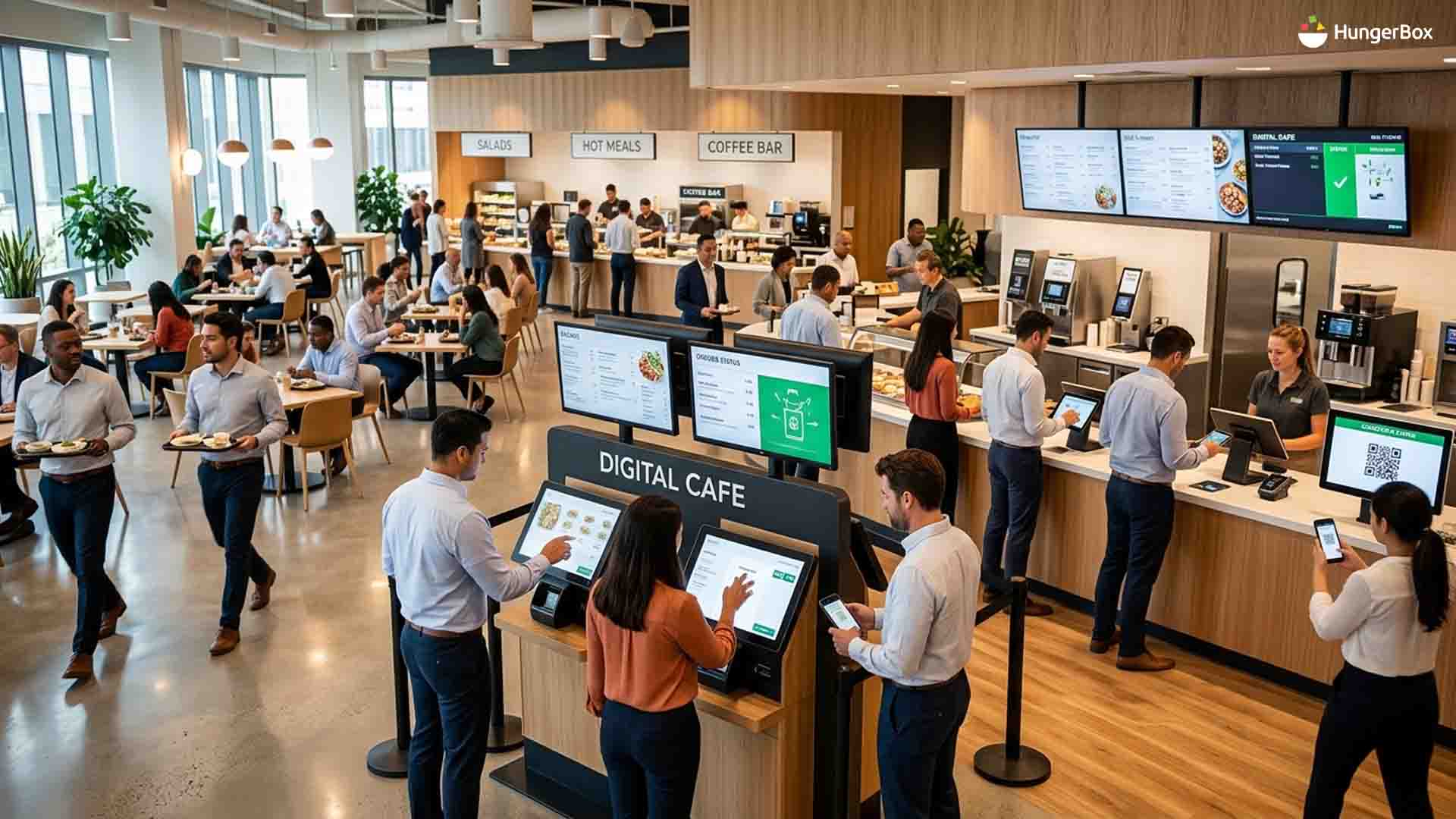
Modern digital cafeterias are no longer just food courts with online ordering. They function as integrated operational ecosystems powered by data, automation, and real-time visibility. A modern corporate cafeteria software platform connects employees, vendors, kitchen teams, administrators, and facility managers into one seamless system that improves efficiency across the entire dining experience.
The shift towards smarter workplace dining is not happening because companies suddenly care more about food. It is happening because cafeteria operations directly influence employee experience, operational efficiency, workplace productivity, and large-scale facilities management.
The modern cafeteria management platform is becoming the operating system behind workplace dining, and its role is much larger than most organisations realise.
Cafeteria Operations Become Complex Faster Than Expected
Most organisations underestimate how quickly cafeteria operations become difficult to manage as employee volumes increase.
A cafeteria serving a few hundred employees can often function using manual coordination and isolated systems. However, once campuses begin handling thousands of meals daily across multiple vendors and time slots, operational complexity rises sharply.
At scale, cafeterias must manage:
- Real-time food demand
- Vendor coordination
- Payment systems
- Queue movement
- Order tracking
- Meal subsidies
- Hygiene compliance
- Seating congestion
- Peak-hour operations
Without integrated systems, even small inefficiencies create larger operational bottlenecks.
This is one of the biggest reasons why cafeteria technology is becoming increasingly important in modern workplaces. Companies are beginning to realise that cafeterias are operational systems, not just food service counters.
A Cafeteria Management Platform Connects the Entire Ecosystem
The biggest role of a cafeteria management platform is not simply digitising food ordering. Its real value lies in connecting multiple moving parts into one operational framework.
In traditional cafeteria environments, vendors, employees, kitchen teams, and facility managers often operate in disconnected systems. Communication gaps become common, especially during peak lunch hours.
A modern platform brings these layers together through:
- Centralised order management
- Real-time kitchen visibility
- Integrated digital payments
- Vendor coordination dashboards
- Employee ordering interfaces
- Analytics and operational insights
Platforms like HungerBox position themselves as end-to-end cafeteria management systems that help businesses digitise food ordering, vendor operations, and operational visibility at scale.
The result is not only operational efficiency, but a significantly smoother workplace dining experience.
Queue Management Becomes a Critical Function
One of the most visible cafeteria problems in large workplaces is congestion during peak hours.
Employees often spend significant time:
- Standing in food queues
- Waiting at billing counters
- Searching for seating
- Checking menu availability
- Tracking delayed orders
As organisations scale, these delays begin affecting productivity and employee satisfaction directly.
Modern digital cafeterias reduce this friction through:
- Pre-ordering systems
- Scheduled pickup slots
- Live order tracking
- Digital billing
- Queue-less collection systems
HungerBox’s workplace dining platform highlights features such as real-time order tracking, queue reduction, and integrated digital payments that improve cafeteria efficiency significantly.
In many enterprises, employees recover substantial time during lunch breaks simply because ordering and collection become more organised.
Vendor Management Is One of the Biggest Challenges
Large workplace cafeterias often involve multiple food vendors operating simultaneously across different counters and cuisines. Managing these vendors manually becomes extremely difficult as operations grow.
Each vendor may have:
- Different preparation capacities
- Separate staffing levels
- Different service speeds
- Independent inventory cycles
- Different hygiene standards
Without integrated systems, operational inconsistencies become unavoidable.
Modern corporate cafeteria solutions centralise vendor management through shared dashboards, performance tracking, and operational visibility. This allows administrators to monitor:
- Vendor service times
- Employee feedback
- Food demand patterns
- Hygiene compliance
- Operational delays
HungerBox specifically emphasises multi-vendor coordination and real-time operational visibility as part of its cafeteria platform ecosystem.
This is important because cafeteria operations are often only as efficient as the weakest vendor inside the system.
Data Visibility Changes Cafeteria Operations Completely
Traditional cafeterias usually operate with very little operational visibility. Managers often make decisions based on assumptions rather than real-time information.
A modern cafeteria management platform changes this by creating continuous operational visibility across the dining ecosystem.
Administrators can track:
- Peak dining hours
- Meal demand trends
- Vendor performance
- Food wastage patterns
- Employee preferences
- Queue congestion
- Payment flows
This shift towards data-driven operations is one of the biggest outcomes of cafeteria digitization.
According to HungerBox’s platform content, real-time analytics and operational dashboards help organisations optimise meal planning, improve efficiency, and reduce wastage.
Over time, this transforms cafeterias from reactive systems into proactive operational environments.
Cafeteria Platforms Also Improve Employee Experience
Most employees may never think deeply about cafeteria systems until something goes wrong. However, dining operations strongly influence how employees experience the workplace every day.
Long queues, poor visibility, payment delays, or inconsistent food availability create frustration that employees immediately notice.
Modern cafeteria platforms improve employee experience through:
- Faster ordering
- Cashless transactions
- Personalised food choices
- Real-time order updates
- Simplified meal discovery
- Seamless payment systems
HungerBox’s platform ecosystem includes mobile ordering, integrated wallets, meal subsidies, employee feedback systems, and live menu visibility designed to simplify workplace dining.
The cafeteria increasingly functions as part of the overall employee experience layer inside workplaces.
Cafeteria Technology Helps Reduce Food Waste
One of the most expensive hidden problems in workplace dining is food wastage caused by poor forecasting and operational inefficiencies.
As workforce attendance patterns become more unpredictable due to hybrid work models and flexible schedules, cafeterias struggle to estimate food demand accurately.
Modern cafeteria platforms use operational data to improve:
- Demand forecasting
- Meal planning
- Vendor preparation
- Inventory visibility
- Consumption tracking
HungerBox’s cafeteria management system highlights predictive demand planning and analytics-driven operations that help organisations reduce food wastage and improve sustainability outcomes.
This is becoming increasingly important as enterprises focus more on operational efficiency and sustainability goals simultaneously.
The Future of Workplace Dining Is Platform-Led
The future of workplace dining will not be built around isolated cafeteria counters or disconnected systems. It will increasingly depend on integrated operational platforms capable of managing scale, visibility, efficiency, and employee expectations together.
Modern workplaces now expect cafeterias to function with the same level of efficiency as other digital systems inside the organisation.
This is why cafeteria technology is evolving rapidly from:
Simple food ordering tools to Enterprise operational platforms
As workplaces continue scaling, cafeteria management platforms will become increasingly central to:
- Facilities management
- Employee experience
- Workplace operations
- Sustainability initiatives
- Operational efficiency
The cafeteria is no longer just a place where employees eat. It is becoming an operational ecosystem that directly affects how workplaces function daily.
Conclusion
A cafeteria management platform does far more than digitise food ordering. It acts as the operational backbone connecting employees, vendors, kitchen teams, facility managers, payments, and workplace dining infrastructure into one integrated ecosystem.
As organisations scale, manual cafeteria systems struggle to handle operational complexity efficiently. This is why enterprises are increasingly investing in corporate cafeteria solutions, intelligent cafeteria technology, and fully integrated digital cafeterias that improve visibility, coordination, and employee experience simultaneously.
The future of workplace dining will belong to organisations that understand cafeterias not as isolated support functions, but as high-volume operational systems requiring intelligent management and real-time visibility.
Looking to modernise your workplace dining operations?
Explore how HungerBox Corporate Cafeteria Solutions helps enterprises digitise cafeteria operations, streamline vendor coordination, reduce queues, improve operational visibility, and create seamless employee dining experiences at scale.