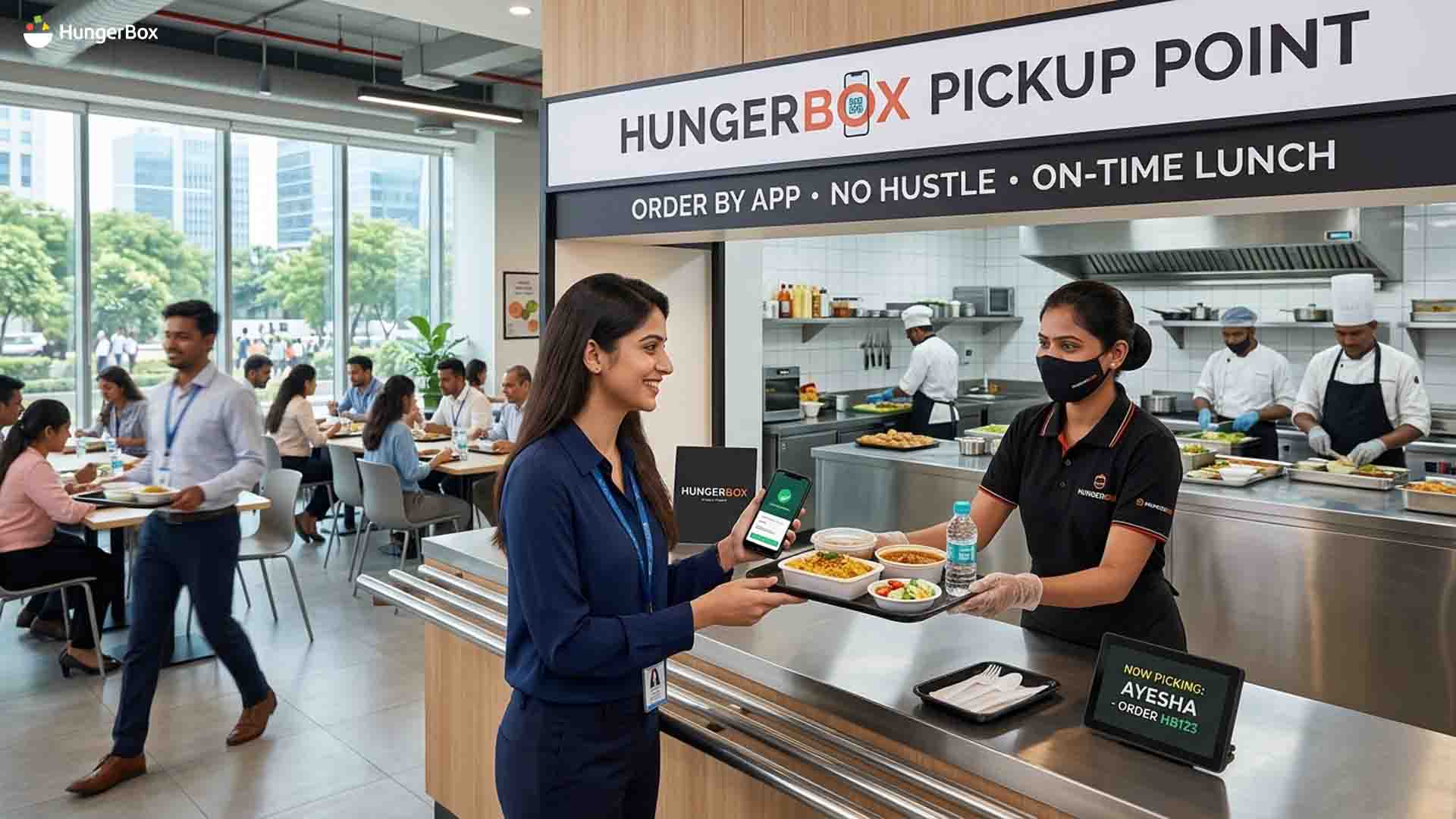
What Breaks When Cafeterias Scale?
Most cafeterias work reasonably well when the scale is small. A few counters, limited vendors, predictable footfall, and manageable lunch volumes allow operations to run without major friction. The real problems begin when cafeterias start serving hundreds or even thousands of employees within extremely short time windows.
At scale, small inefficiencies stop being small. A five-minute delay at one counter creates crowding across the floor. Slow billing affects queue movement. Delayed kitchen communication impacts order fulfilment. Vendor coordination becomes harder. Seating becomes unpredictable. What once looked like a simple food service setup slowly turns into a highly complex operational environment.
This is why large enterprises are increasingly investing in stronger cafeteria operations systems and modern corporate cafeteria solutions. The challenge is no longer only about serving food. It is about managing movement, timing, demand forecasting, vendor coordination, payments, employee expectations, and operational efficiency simultaneously.
As workplaces become larger and employee expectations rise, organisations are beginning to understand that cafeteria infrastructure behaves very differently at scale. Traditional manual processes fail quickly under pressure, while fragmented systems create operational blind spots. This is where digital cafeterias and intelligent corporate cafeteria software are becoming critical for modern workplaces.
The cafeteria may appear simple from the outside, but large-scale food operations are among the most demanding systems inside a workplace. The bigger the workforce becomes, the more visible the cracks become.
Cafeterias Do Not Scale Linearly
One of the biggest misconceptions in workplace dining is the assumption that cafeteria operations simply become “bigger” as employee numbers grow. In reality, complexity increases much faster than scale itself.
A cafeteria serving 200 employees behaves very differently from one serving 5,000 employees across staggered lunch windows. The operational pressure multiplies across every layer of the system:
- Queue management
- Food preparation timing
- Counter coordination
- Vendor communication
- Seating utilisation
- Order fulfilment
- Payment systems
What works manually for a smaller setup often collapses under enterprise-level demand.
This is why many organisations discover operational inefficiencies only after expansion. Systems designed for moderate volumes struggle to handle peak-hour congestion, multiple food vendors, and unpredictable employee behaviour patterns.
Peak Hours Become Operational Pressure Cookers
The most difficult part of large-scale cafeteria operations is not the entire day. It is the concentrated lunch rush.
In many corporate environments, thousands of employees attempt to access food services within a narrow 45 to 90-minute window. During this period, every inefficiency becomes amplified.
Common problems include:
- Long queues at counters
- Delayed food preparation
- Billing bottlenecks
- Vendor miscommunication
- Employees searching for seating
- Counter overcrowding
- Inconsistent order visibility
When these problems happen simultaneously, the cafeteria environment becomes stressful rather than efficient. Employees lose valuable time, vendors struggle to maintain service quality, and facility teams face constant operational pressure.
The challenge becomes even harder in campuses with multiple buildings, shift-based workforces, or hybrid dining systems involving both pre-orders and walk-ins.
Vendor Coordination Starts Breaking Down
As cafeterias scale, food operations increasingly depend on multiple vendors working together inside the same ecosystem. This creates coordination complexity that many organisations underestimate.
Different vendors may have:
- Separate preparation systems
- Different inventory cycles
- Uneven demand spikes
- Variable staffing levels
- Different turnaround times
Without integrated systems, communication gaps begin appearing quickly. One vendor running behind schedule impacts overall cafeteria movement, even if other counters are functioning normally.
This is where fragmented operations become dangerous. Many cafeterias still depend on disconnected processes involving spreadsheets, manual updates, isolated payment systems, or offline coordination between teams.
Modern corporate cafeteria solutions help reduce these operational gaps by bringing vendors, payments, orders, and visibility into a single operational framework.
Manual Systems Create Invisible Operational Delays
Many large cafeterias continue relying on partially manual systems because operations appear manageable during non-peak hours. However, scale exposes every weakness in manual coordination.
A delayed update between kitchen teams and counters may seem minor, but during high-volume periods, even small communication gaps create cascading operational problems.
Manual systems often struggle with:
- Real-time order tracking
- Inventory visibility
- Demand forecasting
- Queue management
- Employee traffic patterns
- Peak-hour planning
As a result, cafeteria teams spend more time reacting to operational issues rather than managing them proactively.
This is one of the biggest reasons organisations are moving towards digital cafeterias supported by integrated operational platforms rather than isolated food service tools.
Employee Expectations Have Changed
The workplace has changed significantly over the last few years, and employee expectations have changed with it.
Employees are now used to fast, seamless digital experiences in almost every part of daily life. They can order transport, groceries, and food within seconds using highly responsive platforms. Naturally, they expect workplace systems to function with similar efficiency.
When cafeteria systems feel outdated or disorganised, employees notice the gap immediately. Long queues, payment delays, unclear order status, or poor visibility affect not only convenience but also workplace perception.
In many ways, the cafeteria has become part of the overall employee experience layer inside organisations. Poor dining systems increasingly reflect operational inefficiency rather than isolated facility issues.
This shift is one of the strongest reasons why enterprises are now investing more seriously in intelligent cafeteria solutions and scalable workplace dining infrastructure.
Food Waste Increases at Scale
One of the least visible but most expensive problems in large cafeterias is food waste.
As employee volumes increase, forecasting demand becomes harder. Variations in attendance, meeting schedules, hybrid work patterns, and shift timings create unpredictability in food consumption.
Without accurate operational visibility, cafeterias often struggle with:
- Overproduction
- Stock shortages
- Uneven vendor demand
- Last-minute menu adjustments
- Wasted prepared food
The financial impact becomes substantial over time. Beyond cost, food waste also creates sustainability concerns for enterprises trying to improve environmental performance.
This is where corporate cafeteria software becomes valuable not only for operations but also for analytics and demand visibility. Better forecasting allows organisations to improve planning while reducing unnecessary waste.
The Real Problem Is Lack of Operational Visibility
Most cafeteria failures at scale are not caused by food quality alone. They are caused by lack of visibility across the operational system.
When organisations cannot track:
- Real-time order flow
- Counter congestion
- Vendor performance
- Food demand trends
- Peak-hour movement
- Service delays
They lose the ability to manage operations proactively.
This creates reactive environments where teams constantly solve immediate problems without addressing structural inefficiencies underneath.
Modern digital cafeterias operate differently because they transform cafeterias into visible, measurable operational ecosystems rather than isolated food counters.
Scaling Cafeterias Requires Systems Thinking
Large-scale dining environments are no longer simple facility operations. They are high-volume operational systems involving logistics, technology, employee behaviour, infrastructure, payments, vendors, and real-time coordination.
Organisations that continue treating cafeterias as secondary support functions often struggle as workforce sizes increase. Meanwhile, enterprises investing in integrated corporate cafeteria solutions are building more resilient and efficient workplace systems.
The future of workplace dining will increasingly depend on:
- Data visibility
- Integrated platforms
- Intelligent forecasting
- Real-time operational management
- Seamless employee experiences
As workplaces continue evolving, cafeterias will become far more technology-driven than they are today.
Conclusion
Cafeterias rarely fail because of one large problem. They fail because multiple small inefficiencies begin colliding under scale.
What starts as occasional delays gradually turns into operational bottlenecks affecting employees, vendors, facilities teams, and workplace productivity itself. Long queues, fragmented systems, poor coordination, and lack of visibility become increasingly difficult to manage as employee volumes rise.
This is why modern enterprises are rethinking cafeteria operations through the lens of systems, technology, and employee experience. The role of corporate cafeteria software is no longer limited to food ordering alone. It is becoming central to how organisations manage large-scale workplace dining efficiently.
As employee expectations continue rising, the future will belong to organisations that treat cafeterias not as support infrastructure, but as operational ecosystems that require intelligent, scalable management.
Looking to modernise your workplace dining operations?
Explore how HungerBox helps enterprises build scalable, technology-driven cafeteria ecosystems with intelligent queue management, vendor coordination, real-time visibility, and seamless employee dining experiences.