How Are Employee Food Services Evolving to Meet Hybrid Workforce Expectations?
Introduction
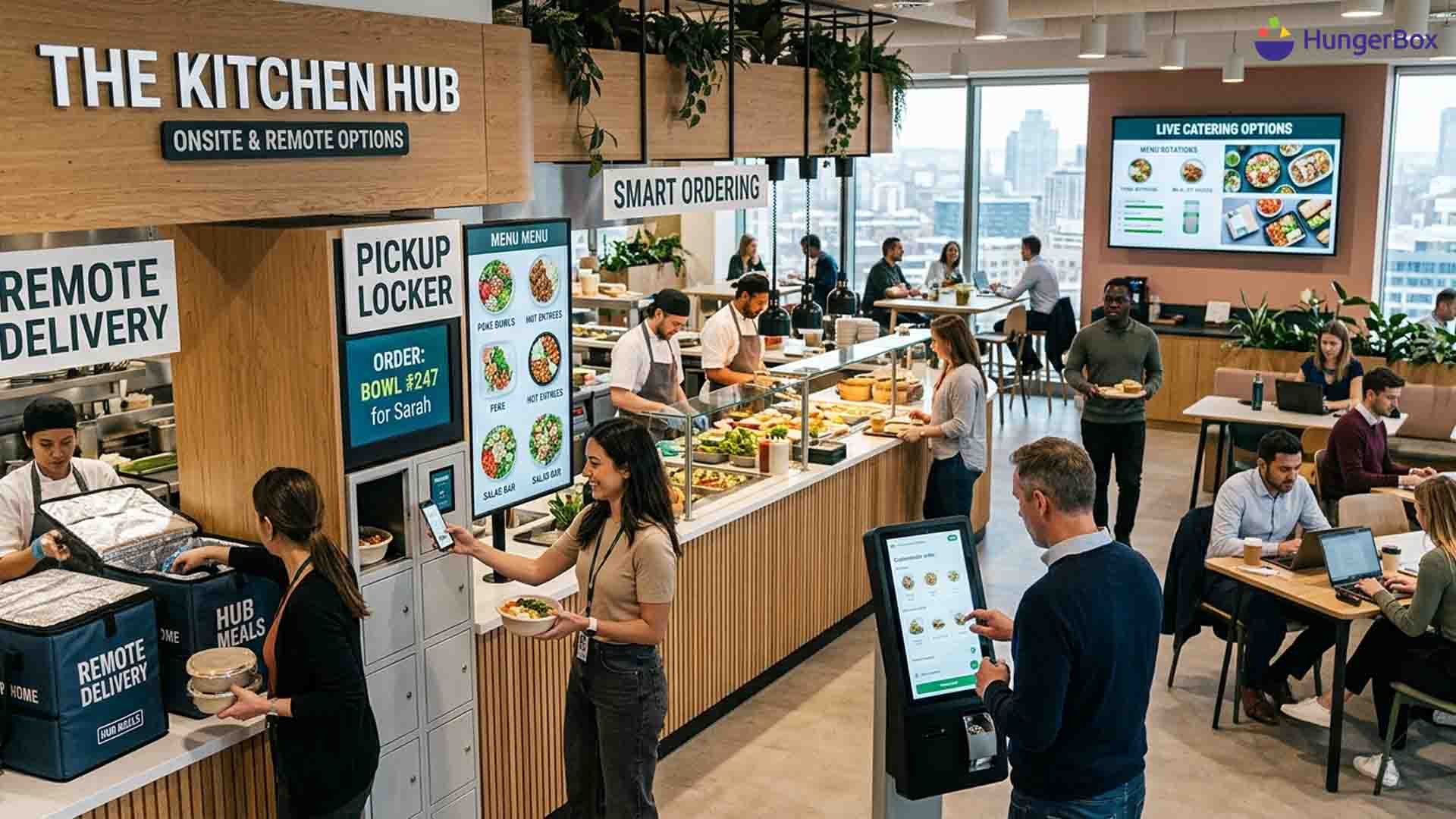
Employee Food Services have evolved from simple office cafeterias into strategic workplace solutions designed to meet the changing needs of a hybrid workforce. Today, organizations are no longer just serving meals—they are delivering flexible, tech-enabled dining experiences that align with employee schedules, preferences, and wellness goals.
With hybrid work models, employee attendance fluctuates daily, making traditional cafeteria systems inefficient and costly. Modern Employee Food Services solve this challenge by offering pre-ordering, real-time menus, contactless payments, and personalized meal options. These services ensure employees can access quality food whether they work from home, office, or both.
Companies are now using data-driven tools to reduce food waste, improve satisfaction, and enhance operational efficiency. As highlighted in industry insights , digital cafeteria solutions are transforming workplace dining into a scalable, intelligent system.
In this blog, we explore how Employee Food Services are adapting to hybrid expectations and why they are becoming a critical part of employee experience and workplace strategy.
Why Hybrid Work Is Reshaping Employee Food Services
Hybrid work has fundamentally changed how employees interact with workplace amenities, including food. Organizations can no longer rely on fixed schedules or predictable cafeteria usage.
Key Changes Driving Evolution
- Unpredictable office attendance
- Increased demand for flexibility
- Higher expectations for convenience
- Focus on health, hygiene, and personalization
Traditional cafeteria models struggle with these dynamics. This is where modern Employee Food Services step in with smarter, adaptable systems.
Core Features of Modern Employee Food Services
1. Digital Ordering and Pre-Booking
Employees can now browse menus and pre-order meals through mobile apps or web platforms. This reduces waiting time and ensures availability.
2. Contactless and Safe Dining
Post-pandemic expectations have made hygiene a priority. Contactless ordering and digital payments are now standard.
3. Personalized Meal Options
Employees can filter meals based on:
- Dietary preferences (vegan, keto, gluten-free)
- Allergies
- Calorie requirements
4. Real-Time Menu Updates
Menus are no longer static. Employees get live updates on availability, pricing, and nutritional details.
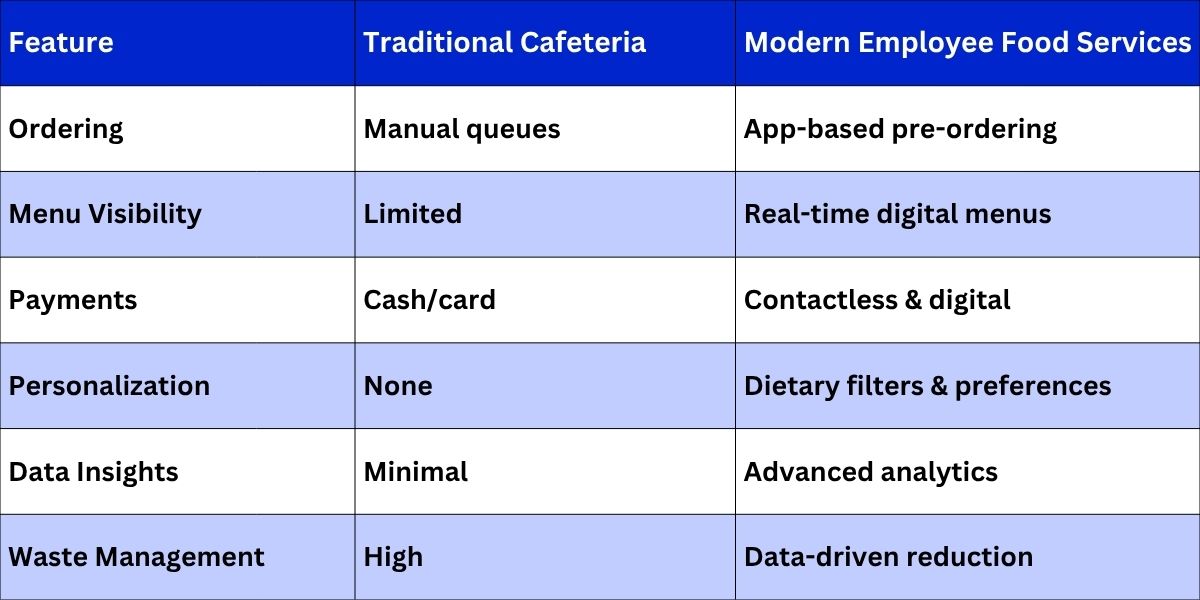
Traditional vs Modern Employee Food Services
Benefits of Employee Food Services for Hybrid Workplaces
Improved Employee Experience
Employees save time, avoid queues, and enjoy better food choices. This improves satisfaction and daily productivity.
Operational Efficiency
Automation reduces manual work, improves vendor coordination, and streamlines billing.
Cost Optimization
Organizations can track consumption patterns and avoid overproduction.
Enhanced Workplace Culture
Food becomes a key engagement driver, especially when employees are in the office fewer days.
How Technology Powers Employee Food Services
Technology is the backbone of modern workplace dining.
Key Tech Integrations
- Mobile apps for ordering
- AI-based demand forecasting
- Integration with HR and attendance systems
- Real-time feedback and rating systems
Data-Driven Decisions
Companies can track:
- Peak dining hours
- Popular meals
- Vendor performance
- Food waste trends
This helps improve both experience and efficiency.
Key Use Cases Across Industries
Employee Food Services are now essential across sectors:
IT & Tech Companies
Flexible meal schedules for hybrid teams and shift workers
Manufacturing Units
Time-based meal slots to manage workforce shifts
Corporate Offices
Multi-vendor cafeterias with centralized control
Healthcare
Hygiene-first food delivery systems
Role of Employee Food Services in Employee Wellness
Food is directly linked to employee health and productivity.
How It Supports Wellness
- Nutritional transparency
- Healthy meal recommendations
- Allergen awareness
- Balanced diet options
Organizations can align food services with wellness programs to improve employee outcomes.
Sustainability and ESG Impact
Modern Employee Food Services also support sustainability goals.
Key Contributions
- Reduced food waste through forecasting
- Digital systems eliminate paper usage
- Vendor tracking for sustainable practices
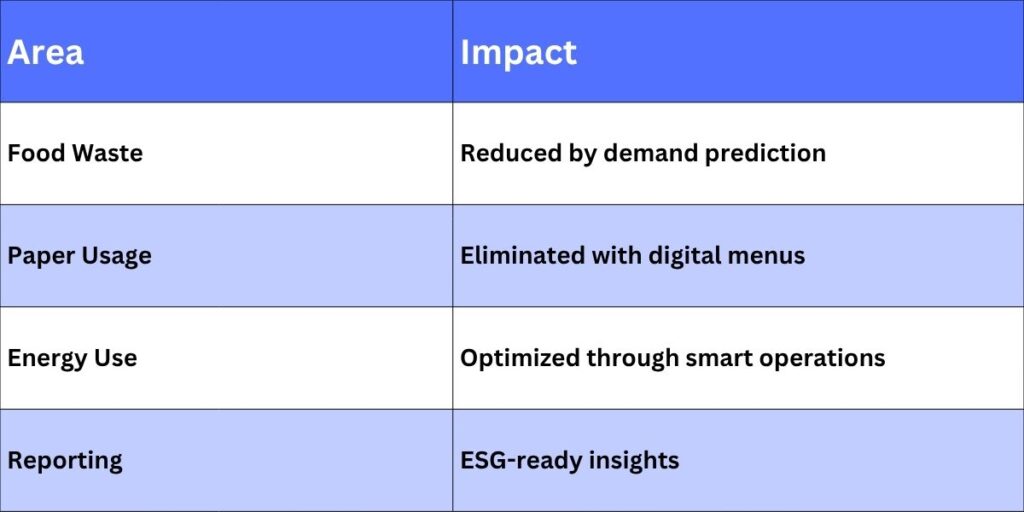
Environmental Impact Table
Challenges in Managing Employee Food Services
Despite advancements, organizations face challenges:
- Managing fluctuating demand
- Ensuring vendor quality
- Maintaining hygiene compliance
- Balancing cost and experience
The solution lies in adopting integrated cafeteria management platforms.
Future Trends in Employee Food Services
The future of workplace dining is more intelligent and personalized.
Emerging Trends
- AI-based meal recommendations
- Smart vending machines
- Voice-enabled ordering
- Integration with wellness apps
- Centralized food wallets
These innovations will continue to redefine Employee Food Services in hybrid workplaces.
Why Businesses Must Upgrade Employee Food Services
Employee expectations are rising. Food services are no longer a basic facility—they are a strategic investment.
Key Reasons to Upgrade
- Improve employee satisfaction
- Reduce operational inefficiencies
- Support hybrid work models
- Enhance employer branding
Companies that modernize their Employee Food Services gain a competitive advantage in talent retention and workplace experience.
Ready to transform your workplace dining experience?
Contact us today to explore how HungerBox can optimize your Employee Food Services
Schedule a demo call and see smart cafeteria solutions in action
Upgrade to corporate cafeteria management that is efficient, scalable, and employee-focused
Frequestly Asked Questions

Employee Food Services refer to modern cafeteria solutions that provide flexible, tech-enabled dining options tailored to hybrid work schedules.
They reduce wait times, offer personalized meals, and provide convenient ordering, leading to higher satisfaction.
Yes, through data-driven forecasting and real-time tracking, organizations can significantly minimize food waste.
Key features include mobile ordering, contactless payments, real-time menus, analytics, and vendor management.
They adapt to fluctuating office attendance, ensuring efficient operations and consistent employee experience.