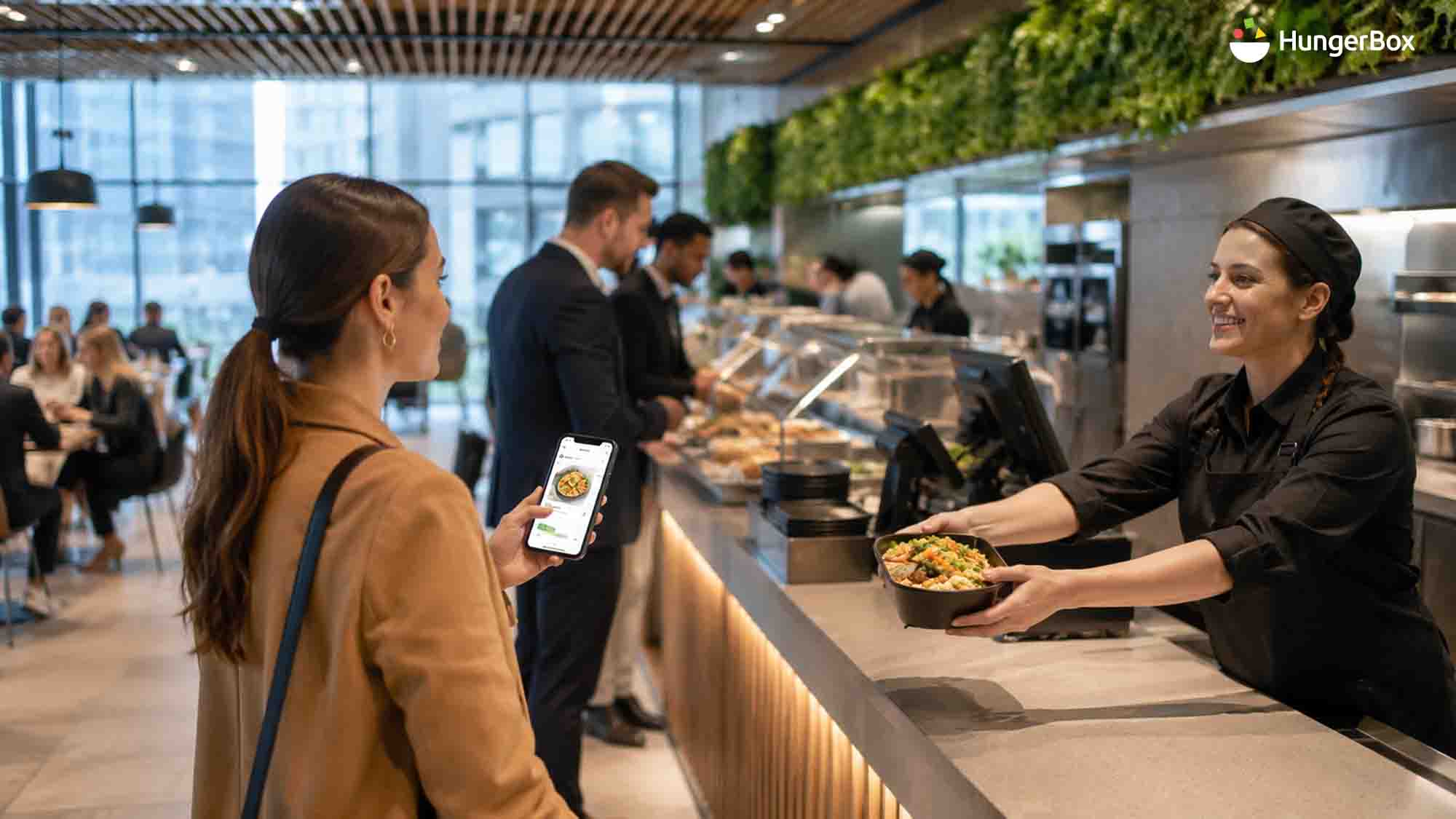
How Digital Cafeteria Solutions Are Transforming Workplace Dining in Canada
Think about the last time you grabbed lunch at the office. If it involved standing in a slow line, fumbling for change, and hoping the dish you wanted hadn't run out, you've experienced the old model of workplace dining. For years that was just how it worked, and most people put up with it. But across Canada, that picture is changing fast.
Employers in Toronto, Vancouver, Calgary, and beyond are rethinking the cafeteria from the ground up, and the centre of that shift is technology. Digital cafeteria solutions take the parts of corporate dining that used to frustrate everyone's queues, cash, guesswork, waste and replace them with apps, contactless pickup, smart forecasting, and real data. The result is a dining experience that feels less like a chore and more like a genuine workplace perk.
This matters more than it might seem. As Canadian companies bring people back to the office on hybrid schedules, the in-office experience has to earn the commute. Food is a big part of that. A cafeteria people actually enjoy makes the office worth showing up to, while one that wastes their time does the opposite. HungerBox builds digital cafeteria solutions designed for exactly this moment, helping Canadian employers feed their teams well, cut waste, and run the whole operation with far less effort. Here's how the technology is reshaping workplace dining, and why so many organizations are making the move.
Workplace Dining in Canada Has Changed
The pressures on Canadian employers today look nothing like they did a decade ago. Hybrid work means attendance shifts day to day, so the old habit of cooking for a steady, predictable crowd no longer holds. Employees also expect more—convenience, variety, dietary options, and a smooth experience that matches the digital tools they use everywhere else.
At the same time, costs and sustainability sit high on every leadership agenda. Food waste is both an expense and an environmental concern, and Canadian organizations are under real pressure to manage both. A dining setup that throws out trays of unsold food every afternoon is hard to defend, whether you're looking at the budget or the company's environmental commitments.
Conventional cafeterias weren't built for any of this. They were built for a stable workforce eating the same way every day. That world is gone, and the dining model has to catch up.
What "Digital" Actually Means for a Cafeteria
Going digital isn't about adding a screen for the sake of it. It's about replacing manual, disconnected processes with one connected system. Here's what that looks like day to day.
App-Based Ordering and Contactless Pickup
Employees browse the menu, order, and pay from their phones, then pick up without waiting in line. For someone with a 30-minute break, skipping the queue is the single biggest improvement they'll notice. It also spreads out demand, so the lunch rush stops being a bottleneck.
Cashless and Flexible Payments
Digital payments remove the friction of cash and make it easy to run meal subsidies, wallet credits, or payroll-linked plans. Everything is tracked automatically, which means cleaner records for the employee and the finance team alike.
Smart Demand Forecasting
This is where the technology earns its keep. By reading historical patterns, day-of-week trends, and live pre-orders, the system predicts how many people will show up and what they'll want. Kitchens prep closer to actual demand, which cuts waste sharply and keeps counters stocked through peak hours.
Data and Analytics
Managers get a live view of footfall, popular dishes, spend, and waste instead of waiting for a month-end report. That visibility turns dining from a fixed cost into something teams can actively tune adjusting menus, staffing, and budgets while it still makes a difference.
The Payoff for Canadian Employers
The reasons Canadian organizations are adopting digital cafeteria solutions come down to a few clear wins.
- Less waste, lower cost: Forecasting and pre-orders mean kitchens cook closer to real demand, so less food ends up in the bin. That shows up directly in the budget and supports sustainability goals at the same time.
- A better return-to-office experience: When you ask people to commute in, the day has to feel worth it. Quick, good, reliable food is one of the easiest ways to make the office a place people don't mind coming to.
- Happier, more productive teams: Short lines and easy ordering give people more of their break back. They eat properly, return on time, and hold their energy through the afternoon instead of crashing.
- Far less operational hassle: Facilities and HR teams stop chasing vendors and reconciling spreadsheets. One platform handles ordering, payments, forecasting, and reporting across every site.
If your organization is ready to modernize how it feeds its people, you can explore HungerBox's Canada cafeteria solution platform to see how it fits your offices.
Curious how this would work for your workplace? Schedule a demo call and we'll tailor a setup to your headcount, sites, and menu.
Conventional Cafeteria vs Digital Cafeteria Solution
Here's how the traditional setup compares with a digital one, side by side.
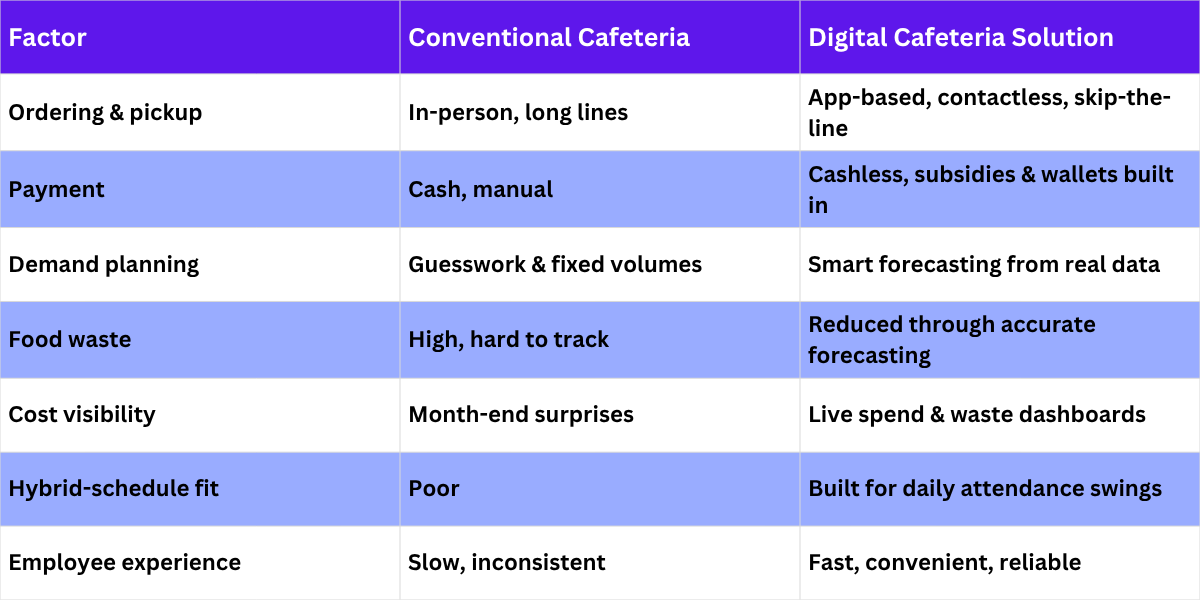
The contrast makes the case on its own. Conventional cafeterias were built for a workplace Canada has largely moved past, while digital solutions fit the way people actually work now.
Choosing the Right Digital Cafeteria Partner
Not every platform delivers equally, so it's worth knowing what to look for. Pay attention to how accurate the demand forecasting really is, how well the system scales across multiple locations, how simple the employee app is to use, and how deep the reporting goes. Food safety and compliance with Canadian health standards should be built in, not bolted on. And the best providers don't just hand you software—they pair it with managed operations so the kitchen, the service, and the technology all work together. A tool that nails the tech but ignores the day-to-day service won't last.
Key Takeaway
Workplace dining in Canada has outgrown the old cafeteria model. Hybrid schedules, rising costs, sustainability pressure, and higher employee expectations have pushed organizations toward digital cafeteria solutions that bring app ordering, cashless payments, smart forecasting, and live analytics into one system. The payoff is real: less waste, lower cost, a stronger return-to-office experience, and teams that get more out of their day. For Canadian employers, it's quickly becoming a standard part of running a modern workplace.
Want to see what this looks like for your team? Contact us and we'll walk you through it.
Frequestly Asked Questions

They’re technology-driven systems that run workplace dining end to end—app-based ordering, cashless payments, demand forecasting, and real-time analytics. Instead of cash, queues, and manual headcount guesses, everything runs through one connected platform.
By forecasting demand from historical patterns and live pre-orders, kitchens prepare closer to what’s actually needed. That reduces unsold food, which lowers cost and supports the sustainability goals many Canadian organizations are working toward.
Yes. Hybrid schedules make daily attendance hard to predict, which is exactly what forecasting and pre-ordering are designed to handle. The system adjusts to the crowd that actually shows up rather than a fixed assumption.
It can. A strong platform brings every site under one dashboard with consistent standards, giving employers a single, clear view of spend, performance, and food quality across all their offices.
No. The technology handles ordering, payments, forecasting, and reporting, while staff and vendors continue running the food service—now with better data and far fewer manual tasks. The best providers combine the software with fully managed operations.