Why U.S. Enterprises Are Adopting Cafeteria Management Software for Hybrid Workplaces
Introduction
A few years ago, planning corporate dining was simple math. You knew roughly how many people walked in each day, you stocked for that number, and the cafeteria ran on a predictable rhythm. Then hybrid work happened. Now Monday looks nothing like Wednesday, headcount swings by hundreds depending on the day, and the old approach of "cook for the usual crowd" leaves you either throwing out trays of food or running out by noon. Neither is acceptable when you're answering to a finance team that watches every line item.
This is the problem cafeteria management software was built to solve. Instead of guessing, enterprises now use a single platform to forecast demand, take orders through an app, handle cashless payments, and see exactly what's happening across every site in real time. For HR and facilities leaders trying to make the office worth the commute, it turns dining from a daily scramble into something that runs quietly in the background.
U.S. companies are paying close attention, and for good reason. As return-to-office mandates push more people back on uneven schedules, the businesses that get workplace dining right are seeing it pay off in attendance, satisfaction, and cost control. HungerBox builds the kind of cafeteria management software that handles this complexity—giving large employers the tools to feed an unpredictable workforce without waste, long lines, or blind spots. Here's why the shift is happening, and what these platforms actually do.
The Hybrid Workplace Broke the Old Cafeteria Model
The traditional corporate cafeteria assumed one thing above all: a stable, predictable crowd. Hybrid work removed that assumption overnight.
When attendance swings from 40% on a Friday to 90% on a Tuesday, fixed-volume cooking falls apart. Order too much and you eat the cost of wasted food. Order too little and employees hit a half-empty counter, walk out, and grab lunch elsewhere—which is exactly the friction companies are trying to remove when they ask people to come in.
Manual processes make it worse. Spreadsheets, headcount guesses, and phone calls to vendors can't keep up with a workforce that changes daily. By the time you've reacted to one pattern, it's shifted again. The model wasn't built for this, and most facilities teams have felt the strain.
What Cafeteria Management Software Actually Does
A cafeteria management platform replaces guesswork and scattered tools with one connected system. Here's what that looks like in practice.
Demand Forecasting for Unpredictable Headcounts
This is the feature that matters most for hybrid offices. By pulling in historical patterns, day-of-week trends, and pre-orders, the software predicts how many people will actually show up and what they'll want. Kitchens prep closer to real demand, which cuts waste and keeps counters stocked through the lunch rush.
App-Based Ordering and Cashless Payments
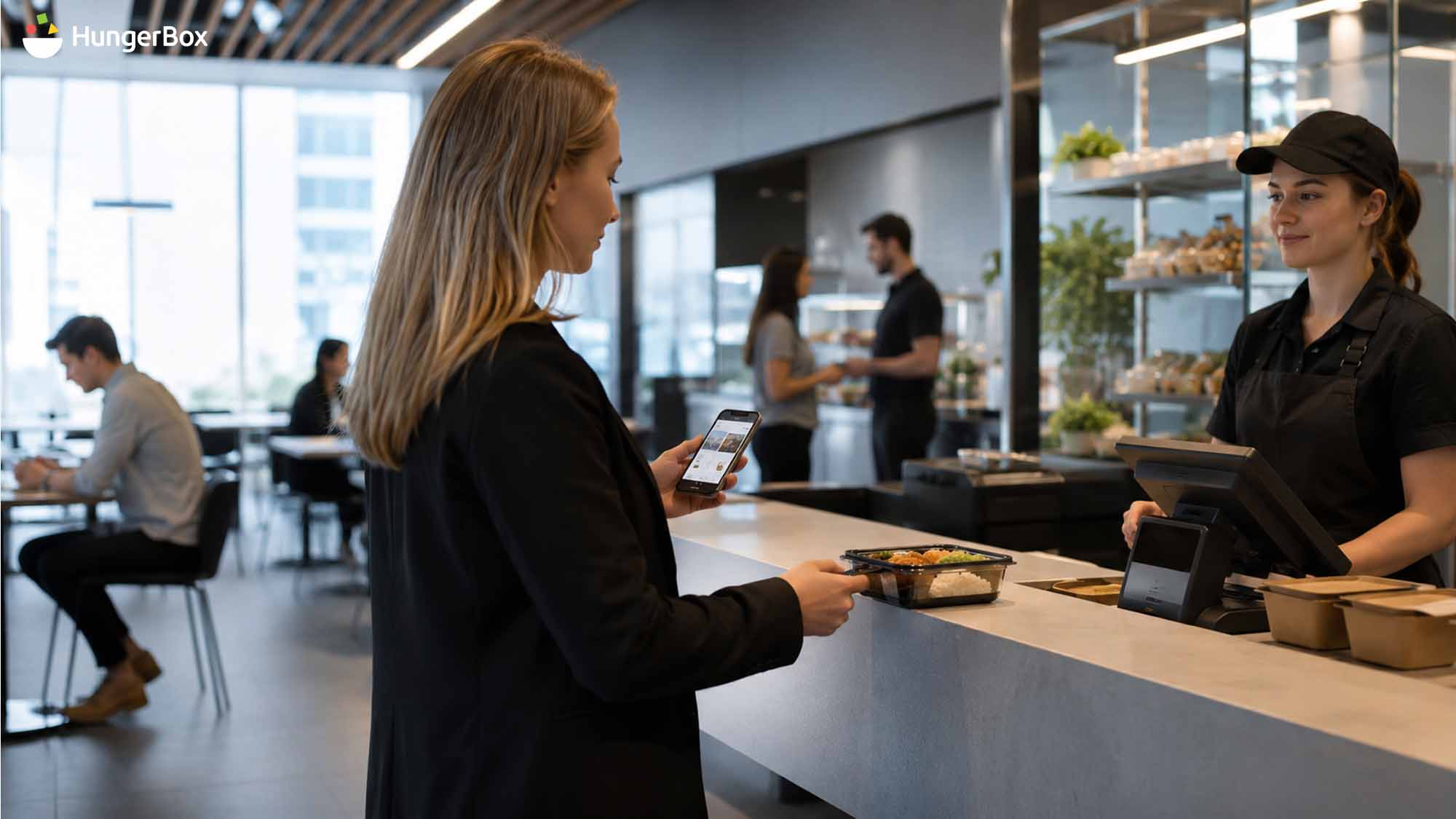
Employees order from their phones, pay digitally, and pick up without standing in line. Pre-ordering also feeds the forecast, so the two features reinforce each other. For a workforce with short, packed lunch breaks, skipping the queue is a real quality-of-life win.
Real-Time Analytics and Reporting
Instead of finding out at month-end that costs ran over, managers see live data on footfall, popular items, spend, and waste. That visibility lets teams adjust menus, staffing, and budgets while it still makes a difference, not after the fact.
Multi-Site and Vendor Management
Large U.S. enterprises rarely run one cafeteria. They run many, often with different vendors in different cities. Good software brings all of that under one dashboard, with consistent standards and a single source of truth for spend and performance across every location.
Why U.S. Enterprises Are Making the Switch
The move toward cafeteria management software isn't about chasing technology for its own sake. It's driven by pressures U.S. companies are feeling right now.
- Cost discipline: Food waste is money in the trash. Forecasting and pre-orders directly shrink that waste, and live reporting keeps spend honest. Finance teams notice the difference fast.
- Return-to-office success: When leadership asks people to commute in, the in-office experience has to justify the trip. A reliable, well-run cafeteria is one of the simplest perks that makes the office feel worth it.
- Employee experience and retention: Short lines, good food, and easy payment add up to a smoother day. It's a small thing repeated daily, and small daily things shape how people feel about where they work.
- Operational sanity: Facilities and HR teams are stretched. Handing the complexity of multi-site dining to one platform frees them from chasing vendors and reconciling spreadsheets.
If your organization is weighing how to modernize workplace dining, this is the moment to look at a corporate cafeteria solution designed for hybrid-era complexity.
Want to see how forecasting and app ordering would work for your offices? Schedule a demo call and we'll tailor it to your headcount and sites.
Legacy Cafeteria Operations vs Cafeteria Management Software
Here's how the manual, legacy approach stacks up against a modern platform.
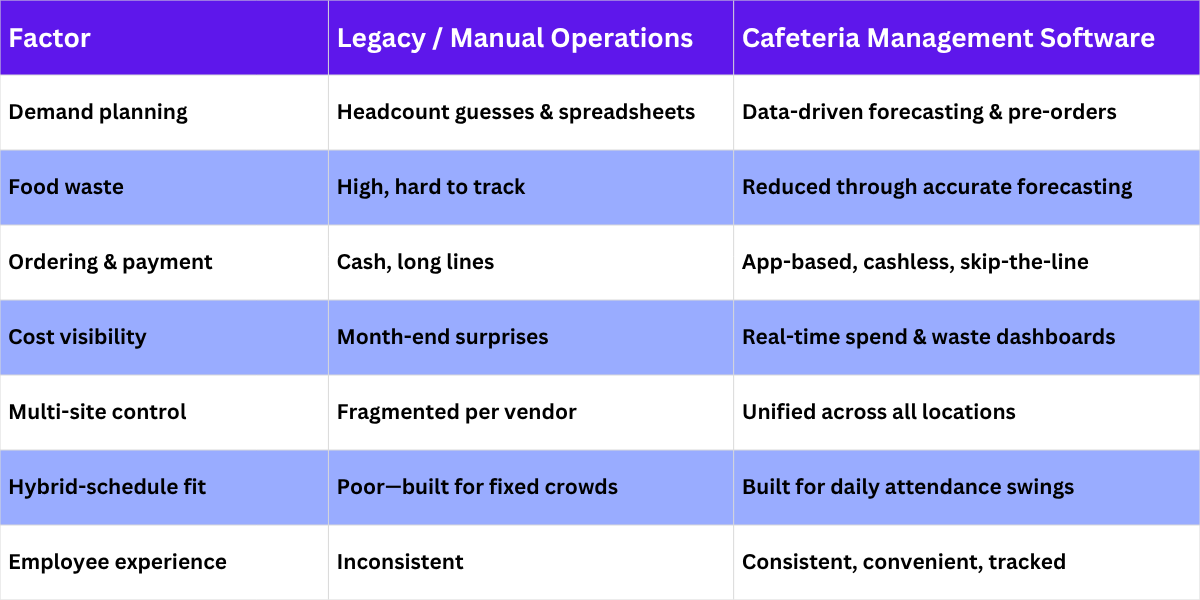
The takeaway from the comparison is straightforward: legacy operations were built for a workplace that no longer exists. Software was built for the one enterprises actually have now.
What to Look for in a Platform
Not every tool is equal. When evaluating cafeteria management software, U.S. enterprises should weigh a few things: how accurate the demand forecasting really is, whether the platform scales cleanly across multiple sites, how easy the employee app is to use, the depth of analytics and reporting, and how well it handles food safety and compliance with local health standards. A platform that nails the technology but ignores the on-the-ground service won't hold up. The best options, including HungerBox, pair the software with managed operations so the whole thing actually runs.
Key Takeaway
Hybrid work made workplace dining unpredictable, and the old fixed-volume cafeteria model couldn't keep up. Cafeteria management software answers that with demand forecasting, app-based ordering, real-time analytics, and multi-site control—cutting waste, shortening lines, and giving HR and facilities teams the visibility they were missing. For U.S. enterprises trying to make the office worth the trip while keeping costs in check, it's becoming a standard part of the workplace stack rather than a nice-to-have.
Ready to modernize how your offices handle dining? Contact us and we'll show you what it looks like for your team.
Frequestly Asked Questions

It’s a platform that runs corporate dining end to end—forecasting demand, taking app-based orders, handling cashless payments, and giving managers real-time data on footfall, spend, and waste. It replaces spreadsheets and manual headcount guesses with one connected system.
Hybrid schedules make daily attendance unpredictable, which breaks fixed-volume cooking. The software forecasts how many people will actually show up and what they’ll order, so kitchens prep closer to real demand instead of over- or under-producing.
By forecasting demand and using pre-orders, kitchens cook closer to what’s actually needed. Live dashboards then show spend and waste as they happen, so teams can adjust before costs run over rather than discovering problems at month-end.
Yes. A strong platform brings every site and vendor under one dashboard with consistent standards, giving enterprises a single source of truth for performance, spend, and food quality across all their offices.
No. It works alongside them. The technology handles ordering, payments, forecasting, and reporting, while staff and vendors continue running food service—now with better data and fewer manual headaches. The best providers pair the software with managed operations.