
How Does AI Food Demand Forecasting Work?
Introduction
Every day, cafeteria teams face one big question: how much food should be prepared? Cook too much, and food goes to waste. Cook too little, and employees leave hungry. This is a problem that many offices deal with every single day. This is where AI food demand forecasting steps in to make things easier.
AI food demand forecasting uses past data, patterns, and daily inputs to predict how many meals will be needed. It looks at things like employee count, previous orders, weekdays, holidays, and even weather to give a close estimate of tomorrow's food needs. This helps kitchen teams plan better instead of guessing.
For companies with large cafeterias, this kind of forecasting saves money, reduces waste, and improves the food experience for employees. It also helps vendors buy the right amount of raw material, cook the right quantity, and avoid last-minute shortages.
In this blog, we will explain how AI food demand forecasting works, what data it uses, and why it is becoming an important part of modern cafeteria management. By the end, you will understand why more companies are choosing smart forecasting over manual guesswork.
What is AI Food Demand Forecasting?
AI food demand forecasting is a smart way of predicting how much food a cafeteria will need on a given day. Instead of relying on guesswork, it studies real data and gives a clear number to plan around.
This helps answer simple but important questions:
- How many meals should be prepared tomorrow?
- Which food items will be ordered the most?
- Will demand be higher or lower than usual?
By answering these questions early, kitchen teams can plan their day with much more confidence.
Why Guesswork Doesn't Work Anymore
In the past, cafeteria teams depended on experience and rough estimates. This often led to extra food being thrown away or employees not getting their preferred meal. As office sizes grow, guesswork becomes harder to rely on, which is why data-based forecasting has become so useful.
How Does AI Food Demand Forecasting Work?
The process may sound complex, but it follows a simple flow.
1. Collecting Past Data
The system looks at past orders, meal counts, and employee attendance. This data forms the base for any prediction.
2. Studying Patterns
It checks patterns like which days have higher demand, which meals are more popular, and how demand changes during festivals or events.
3. Adding Daily Inputs
Along with old data, the system also looks at current details such as expected employee attendance, weather, or special events planned that day.
4. Making a Prediction
Based on all this information, the system gives a clear estimate of how many meals are needed and which items are likely to be ordered the most.
5. Updating in Real Time
As new orders come in during the day, the system keeps updating its prediction. This helps kitchen teams adjust quickly if demand changes.
Key Features of AI Food Demand Forecasting
Accurate Meal Count Prediction
It gives a close estimate of how many meals will be needed, reducing both shortage and extra cooking.
Menu-Wise Demand Insight
It shows which food items are likely to be popular, helping chefs plan the right quantity for each dish.
Waste Reduction
By predicting demand closely, cafeterias avoid over-preparing food that later goes to waste.
Better Inventory Planning
Kitchen teams can order raw materials based on predicted demand instead of rough guesses.
Real-Time Adjustments
The system updates predictions during the day as actual orders come in, keeping plans accurate.
Benefits of AI Food Demand Forecasting
For Cafeteria and Kitchen Teams
- Less food wastage
- Better planning of ingredients
- Smoother kitchen operations
- Lower daily cooking stress
For Companies
- Lower food costs
- Better budget control
- Higher employee satisfaction
- Less manual tracking work
For Employees
- Favourite meals available more often
- Shorter waiting time during rush hours
- Better overall food experience
AI Food Demand Forecasting: Quick Comparison
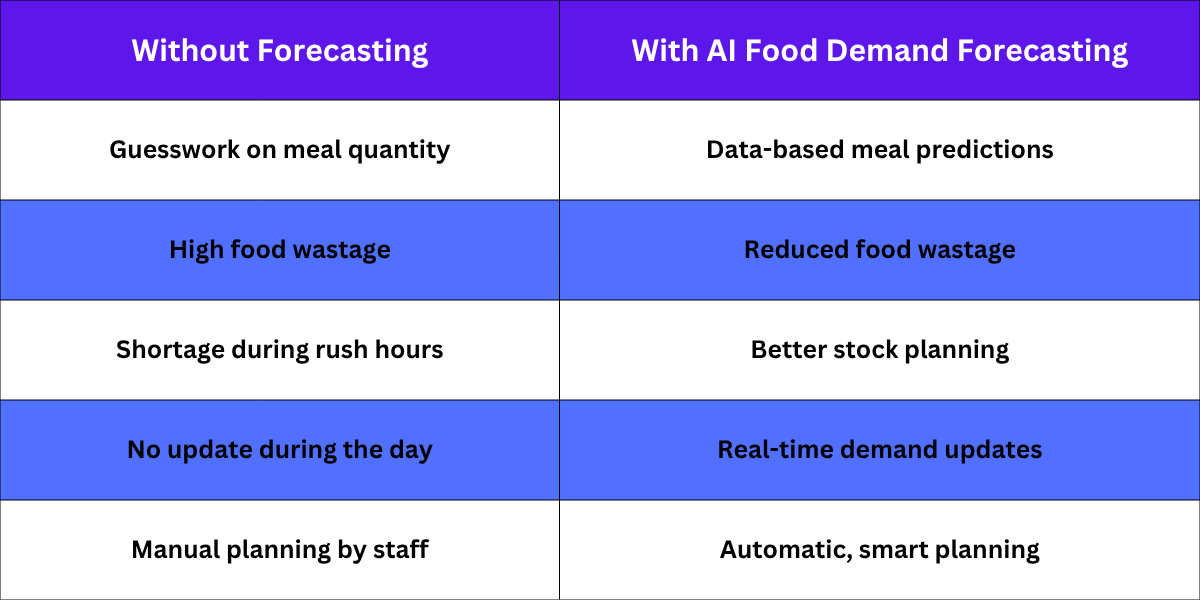
Key Takeaways
- AI food demand forecasting predicts how much food is needed using past data and daily inputs.
- It reduces food wastage and helps avoid shortages during busy hours.
- Kitchen teams get better control over ingredient planning and daily cooking.
- Companies save money and improve employee satisfaction with accurate planning.
- The system keeps updating predictions in real time as the day progresses.
Why Choose HungerBox for Smart Food Demand Forecasting
HungerBox helps corporate cafeterias plan food smarter with demand forecasting built into its cafeteria management system. From predicting meal counts to reducing waste, HungerBox makes daily food planning simple and stress-free for your team.
If you want to bring smarter planning to your workplace cafeteria, HungerBox can help you get started with a system built for your needs.
Schedule a call with our team to see how demand forecasting can work for your office.
Contact us today and take the first step towards better food planning.
Learn more about our solution here: https://www.hungerbox.ai/corporates-cafeteria-management/
Frequestly Asked Questions

It is a smart way of predicting how much food a cafeteria will need each day. It studies past orders and current details to give a close estimate. This helps kitchen teams plan better and avoid waste.
It predicts meal counts closely, so kitchens cook only what is needed. This avoids extra food being thrown away each day. Over time, this saves both money and resources.
It uses past order history, employee attendance, and daily inputs like weather or events. These details help the system understand patterns. This makes predictions more accurate over time.
Yes, it considers special events and expected attendance while predicting demand. This helps kitchens prepare enough food for busy days. It reduces shortages during high-demand periods.
You can schedule a call with the HungerBox team to discuss your needs. They will guide you through the setup process. This helps you start smart food planning quickly.