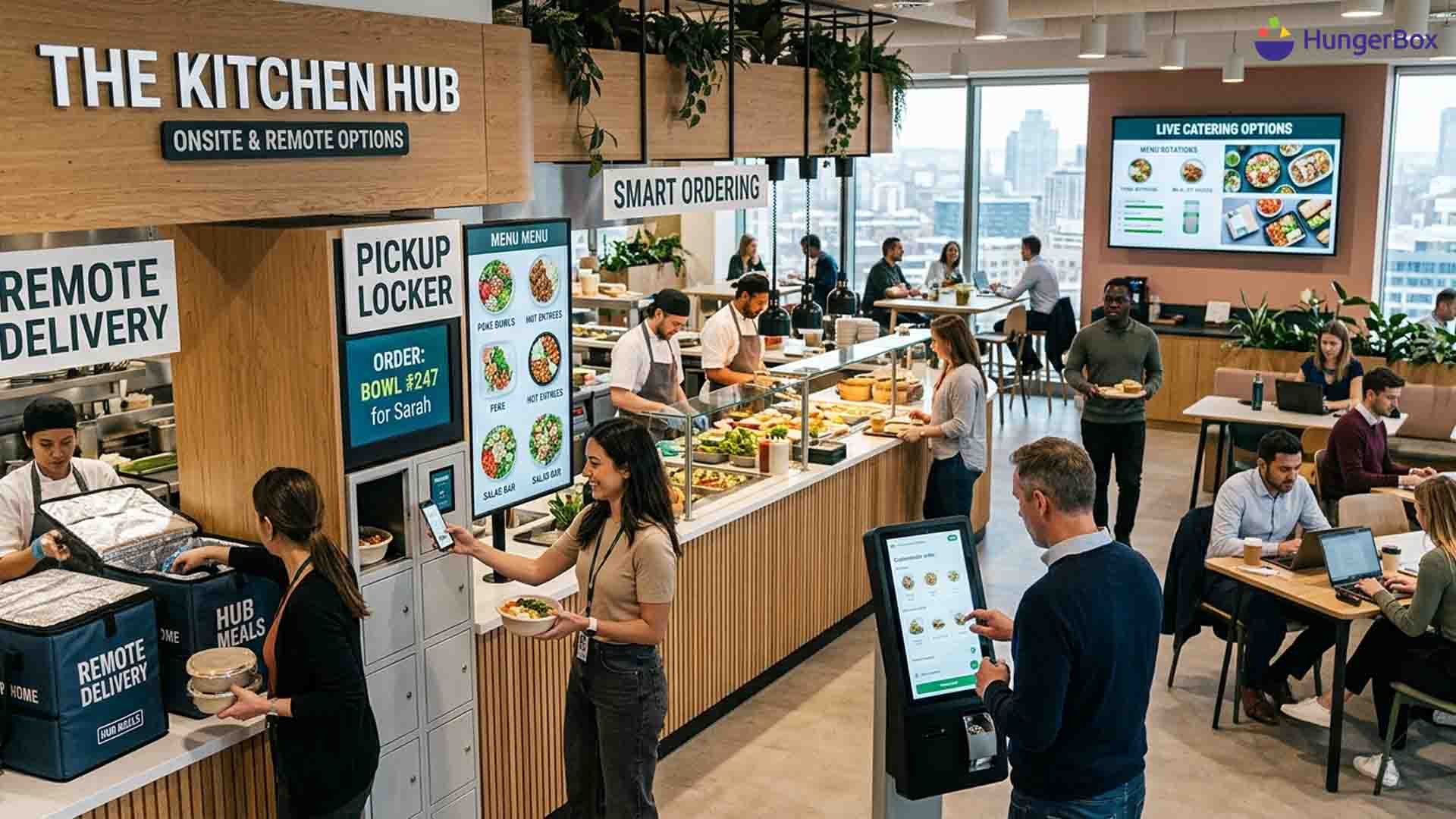
Why Workplace Dining Is Becoming a Core Employee Experience Lever?
For years, companies looked at the corporate cafeteria as a support function. It existed to serve food, handle lunch breaks, and keep office operations running smoothly. Very few organisations saw it as something that could shape culture, influence retention, or improve the overall employee experience.
That thinking is now changing rapidly. As offices evolve and competition for talent becomes stronger, businesses are beginning to understand that employees no longer judge workplaces only by salaries, titles, or office interiors. They increasingly evaluate the everyday experience of coming to work, and dining plays a surprisingly important role in that equation.
The cafeteria is one of the few places where every employee interacts with the workplace daily. It affects mood, energy, collaboration, and even how employees perceive the company itself. A poorly managed cafeteria creates frustration and wasted time, while a well-designed dining system contributes directly to employee satisfaction and workplace culture.
This shift is especially visible in large campuses and enterprise workplaces where food operations impact thousands of people every day. Long queues, delayed orders, poor food visibility, and inconsistent experiences create operational friction that employees immediately notice. In contrast, efficient and thoughtful workplace dining systems help organisations create a smoother, more connected workday.
The modern corporate cafeteria is no longer just about food. It is becoming an important layer of the overall employee experience, and companies that understand this early are beginning to see the benefits across productivity, engagement, and retention.
The Workplace Has Changed Faster Than Cafeterias
Most workplaces today look very different from what they were five years ago. Hybrid work models, flexible timings, younger workforces, and rising expectations around convenience have changed how employees interact with offices. Yet many cafeteria systems still operate with outdated processes built for a different era.
Employees are now used to seamless digital experiences in almost every part of life. They can track rides in real time, order groceries instantly, and make payments within seconds. Naturally, they expect the same level of convenience inside the workplace as well.
When cafeteria operations remain slow, fragmented, or difficult to navigate, the contrast becomes obvious. Employees do not separate food operations from workplace culture. To them, it is all part of the same experience.
A chaotic lunch break may seem like a small inconvenience, but repeated daily friction slowly shapes how employees feel about the organisation itself. That is why companies are beginning to rethink the role of workplace dining beyond simple meal delivery.
Employee Experience Is Built Through Daily Moments
Many organisations spend heavily on branding, office design, and employee engagement initiatives. However, the strongest drivers of workplace perception are often smaller daily interactions that employees repeatedly experience.
The lunch break is one of those moments. It is where teams interact informally, conversations happen naturally, and employees take a mental pause from work pressure. In many ways, the cafeteria becomes the social centre of the workplace.
A smooth dining experience can positively influence:
- Workplace energy
- Collaboration between teams
- Employee morale
- Perception of organisational care
- Overall workplace rhythm
On the other hand, overcrowded cafeterias, unpredictable waiting times, or inconsistent service create unnecessary frustration during the most important break of the day.
This is why businesses are increasingly treating workplace dining as part of the larger employee experience strategy rather than an isolated facility operation.
The Hidden Productivity Cost of Poor Dining Systems
One of the most overlooked business problems in large workplaces is the amount of productive time lost during lunch hours.
In many organizations, employees spend:
- 10 to 15 minutes finding available counters
- Additional time waiting in queues
- More time searching for seating
- Further delays during payment and order collection
When multiplied across thousands of employees, the time loss becomes enormous. A poorly managed corporate cafeteria does not only affect convenience. It directly impacts operational efficiency.
This is where technology-driven workplace dining systems are beginning to play a major role. Digital ordering, real-time visibility, smart queue management, and integrated cafeteria platforms reduce friction significantly while improving the employee journey.
The result is not just faster food service. It is a smoother workday that employees immediately notice.
Workplace Dining Is Becoming a Reflection of Company Culture
Employees increasingly associate workplace quality with the quality of everyday systems around them. Cafeterias are now part of that perception.
A thoughtful dining setup signals:
- Operational maturity
- Employee-centric thinking
- Organisational efficiency
- Attention to daily employee needs
Companies that invest in better dining infrastructure often communicate something much larger than food quality. They signal that employee comfort matters.
This becomes especially important in competitive hiring markets where workplace culture influences retention. A modern office cannot claim to prioritise employees while ignoring one of the most visible parts of the workday experience.
In many cases, the cafeteria becomes one of the most emotionally remembered parts of office life. Employees may forget meeting rooms or presentation screens, but they remember long queues, rushed lunches, or enjoyable dining spaces shared with colleagues.
Technology Is Reshaping the Corporate Cafeteria
The future of workplace dining will be heavily shaped by digitisation. Organisations are realising that cafeteria operations are not only food systems but operational systems that require visibility, coordination, and real-time management.
Modern workplace dining platforms now help organisations:
- Manage large-scale food operations
- Reduce congestion during peak hours
- Improve vendor coordination
- Track food demand patterns
- Reduce food waste
- Improve payment and ordering efficiency
This transformation is especially relevant for large enterprises managing multiple vendors and high employee volumes.
As workplace operations become more data-driven, the corporate cafeteria is evolving into a technology-enabled experience platform rather than a standalone food court.
The Future of Work Includes the Future of Dining
As organisations continue to rethink offices, workplace dining will become increasingly important in shaping how employees feel about returning to physical workspaces.
The office is no longer competing only with other offices. It is competing with the convenience of home. That means every part of the in-office experience matters more than before.
Employees expect workplaces to feel:
- Efficient
- Comfortable
- Connected
- Human
- Convenient
Dining plays a major role in delivering those expectations. Companies that continue treating cafeterias as secondary infrastructure may struggle to create meaningful workplace experiences in the future.
Meanwhile, organisations that invest in smarter dining systems, operational efficiency, and employee-centric food experiences are likely to build stronger workplace cultures over time.
Conclusion
The conversation around workplace dining is no longer only about meals, menus, or cafeteria management. It is increasingly about culture, efficiency, and the overall employee experience.
The modern corporate cafeteria has become one of the most visible daily touchpoints between employees and the workplace itself. When managed well, it improves convenience, supports collaboration, reduces friction, and contributes directly to employee satisfaction.
As organisations rethink the future of work, workplace dining will continue moving from a background facility operation to a strategic business lever. The companies that understand this shift early will not only build better cafeterias. They will build better workplaces.
Looking to transform your workplace dining experience?
Explore how HungerBox helps enterprises build smarter, technology-driven cafeteria systems that improve efficiency, reduce operational friction, and elevate employee experience at scale.