Digital Cafeteria Platforms Explained: Features, Benefits & Why Businesses Choose HungerBox
Introduction
Digital Cafeteria Platforms are modern software solutions that transform how workplace cafeterias operate. In simple terms, they replace manual food service systems with a digital, data-driven experience, covering everything from menu management and ordering to payments, vendor coordination, and analytics.
For businesses, this means employees can browse menus, pre-order meals, and pay digitally, without waiting in long queues. For facility managers, it provides real-time insights into food consumption, vendor performance, and cost control.
Today, organizations are adopting Digital Cafeteria Platforms not just for convenience, but to improve employee satisfaction, reduce food waste, ensure hygiene compliance, and optimize operations at scale. As workplace expectations evolve, especially in hybrid and large campus environments, digital cafeteria solutions are becoming a strategic necessity rather than an optional upgrade.
What Are Digital Cafeteria Platforms?
A Digital Cafeteria Platform is an end-to-end software system designed to manage workplace food services efficiently. It connects employees, vendors, and administrators on a single platform.
Key Functions Include:
- Digital menu display with real-time updates
- Mobile-based pre-ordering and scheduling
- Contactless payments and subsidy management
- Vendor coordination and performance tracking
- Data analytics for consumption and cost optimization
These platforms are built to simplify cafeteria operations while improving the overall dining experience.
Why Businesses Are Moving to Digital Cafeteria Platforms
Modern workplaces demand speed, flexibility, and personalization. Traditional cafeterias fail to meet these expectations.
Key Drivers of Adoption
1. Changing Employee Expectations
Employees want quick service, menu transparency, and dietary options. Digital systems make this possible.
2. Need for Operational Efficiency
Manual processes lead to errors, delays, and higher costs. Automation solves these issues.
3. Data-Driven Decision Making
With analytics, companies can track food trends, reduce waste, and improve planning.
4. Hybrid Work Challenges
Unpredictable footfall requires smart forecasting and flexible food preparation.
As highlighted in internal insights from HungerBox, digital cafeteria solutions are helping enterprises align food services with modern workplace needs.
Core Features of Digital Cafeteria Platforms
1. Smart Ordering & Queue Management
- Pre-order meals via mobile
- Slot-based pickup to avoid crowding
- Real-time order tracking
2. Multi-Vendor Management
- Centralized dashboard for all vendors
- Performance tracking and SLA monitoring
- Easy onboarding and coordination
3. Contactless Payments
- Digital wallets and UPI integration
- Automated subsidies and billing
- Zero cash handling
4. Data & Analytics
- Consumption trends
- Cost-per-meal insights
- Waste tracking
H3: 5. Hygiene & Compliance Tools
- Digital audits and checklists
- Allergen and nutrition tagging
- Real-time feedback systems
Benefits of Digital Cafeteria Platforms
For Businesses
- Reduced operational costs
- Better vendor accountability
- Real-time reporting for decision-making
- Improved compliance and hygiene tracking
For Employees
- Faster service, no queues
- Personalized meal options
- Transparent menus and nutrition info
- Seamless payment experience
For Facility Managers
- Centralized control
- Predictive demand planning
- Improved resource allocation
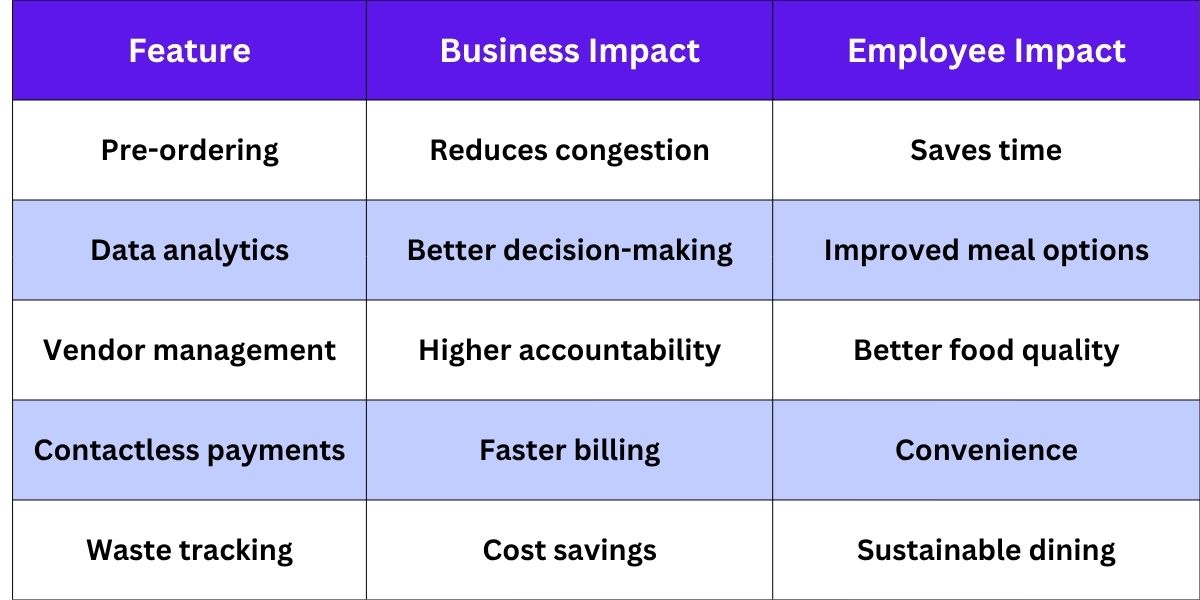
Key Benefits at a Glance
How HungerBox Stands Out
HungerBox is one of the leading providers of Digital Cafeteria Platforms, designed specifically for large enterprises and corporate campuses.
What Makes HungerBox Different?
- End-to-end cafeteria automation
- Scalable for multi-location operations
- Advanced analytics and reporting
- Seamless integration with HRMS and access systems
- Strong focus on employee experience
HungerBox transforms cafeterias into smart, efficient, and data-driven ecosystems.
Use Cases Across Industries
Digital cafeteria platforms are widely used across sectors:
- Manage large employee volumes
- Enable quick service during peak hours
- Ensure hygiene and compliance
- Provide diet-specific meals
- RFID-based access and meal tracking
- Shift-based food scheduling
- Pre-scheduled meals for students
- Nutrition-focused menus
Key Takeaways
- Digital Cafeteria Platforms simplify and automate food services
- They improve employee experience and operational efficiency
- Businesses gain real-time insights and cost control
- Platforms like HungerBox lead the transformation
- Digital dining is becoming a standard in modern workplaces
Why Digital Cafeteria Platforms Are the Future
Workplace dining is no longer just a utility, it’s part of employee experience and business strategy.
With features like AI-based forecasting, contactless services, and real-time analytics, digital cafeteria platforms are shaping the future of corporate dining.
Companies that adopt these platforms early gain a competitive advantage in efficiency, employee satisfaction, and cost optimization.
Ready to transform your workplace dining experience?
Contact us to explore tailored solutions
Schedule a demo call and see the platform in action
Upgrade to a smart Corporate Cafeteria Software with HungerBox
Frequestly Asked Questions

A digital cafeteria platform is software that automates food ordering, payments, and cafeteria management in workplaces.
They reduce manual work, automate processes, and provide real-time data for better decision-making.
Yes, they are scalable and can be customized for both small and large organizations.
They use data analytics and demand forecasting to align food preparation with actual consumption.
HungerBox offers a scalable, feature-rich solution designed for enterprise cafeteria management.