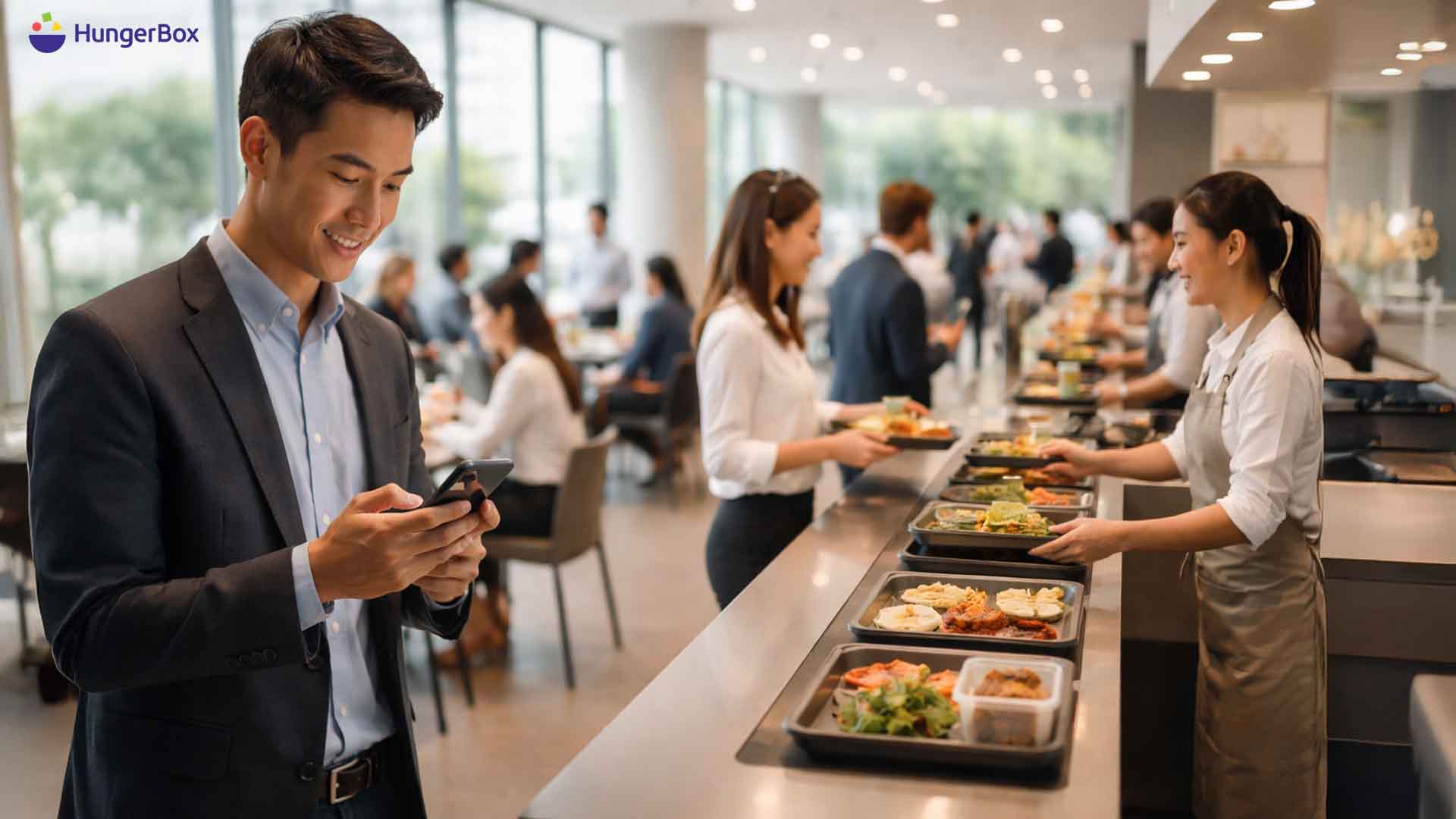
What Makes Cafeteria Management Critical for Scaling Workplace Food Operations
Overview
A Corporate Canteen is no longer just a place where employees grab meals, it has evolved into a strategic business function. In simple terms, a Corporate Canteen is a managed food service system within workplaces designed to deliver safe, timely, and quality meals to employees at scale. Today, with growing workforce expectations and hybrid work models, companies must ensure their cafeteria operations are efficient, data-driven, and employee-centric.
This is where Cafeteria Management becomes critical. It helps organizations streamline food operations, reduce waste, ensure hygiene compliance, and improve employee satisfaction. Modern cafeteria systems go beyond serving food—they integrate technology for pre-ordering, vendor management, and real-time analytics. As highlighted in industry insights , companies are shifting toward digital cafeteria solutions to enhance operational efficiency and deliver personalized dining experiences.
In this blog, we explore why Cafeteria Management plays a key role in scaling workplace food operations and how businesses can leverage it for better outcomes.
Why Cafeteria Management Is Essential for Scaling Operations
Scaling workplace dining is not just about increasing food quantity, it’s about managing complexity efficiently.
Key Reasons It Matters
- Ensures consistent food quality across locations
- Reduces manual errors and operational delays
- Enables data-driven decision making
- Improves employee dining experience
- Supports compliance and hygiene standards
Without structured Cafeteria Management, organizations face issues like long queues, food wastage, vendor inefficiencies, and employee dissatisfaction.
Core Challenges in Traditional Corporate Canteens
Before understanding the benefits, it’s important to identify common challenges:
Operational Gaps
- Unpredictable demand and overproduction
- Lack of real-time visibility into food consumption
- Poor vendor coordination
- Manual billing and reporting errors
Employee Experience Issues
- Long waiting times
- Limited food choices
- Lack of transparency in ingredients and nutrition
These gaps highlight the need for a modern Cafeteria Management system.
Key Components of Effective Cafeteria Management
1. Demand Forecasting and Planning
Smart systems use data to predict meal demand based on attendance trends and historical data.
2. Vendor Management
- Performance tracking
- SLA monitoring
- Quality control
3. Digital Ordering and Payments
- Pre-order meals
- Contactless payments
- Reduced queues
4. Real-Time Analytics
- Track consumption patterns
- Monitor food wastage
- Optimize menus
Benefits of Cafeteria Management for Workplace Scaling
Operational Benefits
- Streamlined food service operations
- Reduced dependency on manual processes
- Better inventory control
Financial Benefits
- Lower food wastage
- Controlled procurement costs
- Improved ROI
Employee Benefits
- Faster service
- Personalized meal options
- Improved satisfaction
How Technology Transforms Cafeteria Management
Modern cafeteria platforms are redefining workplace dining.
Key Features Driving Transformation
- Mobile-based food ordering
- Slot-based meal scheduling
- AI-powered demand forecasting
- Integrated vendor dashboards
Impact on Business
- Increased efficiency
- Better decision-making
- Enhanced employee engagement
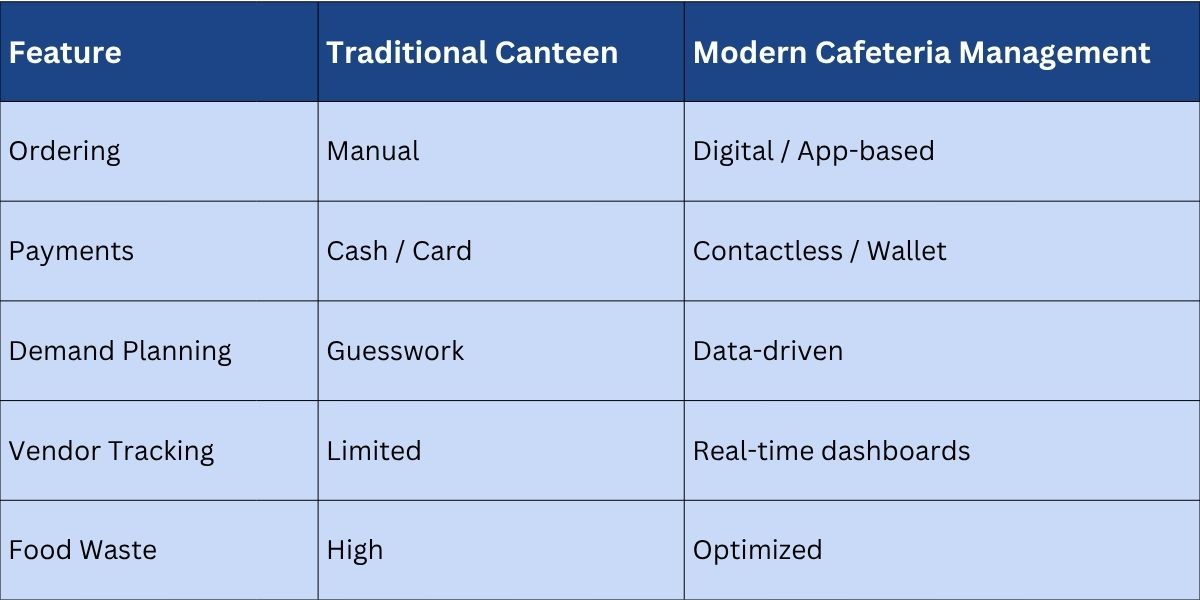
Cafeteria Management vs Traditional Setup
Role of Cafeteria Management in Employee Experience
Employee expectations have changed significantly.
What Employees Want Today
- Quick service with no queues
- Healthy and diverse meal options
- Transparency in food quality
- Convenience through technology
A well-managed cafeteria directly contributes to:
- Higher productivity
- Better workplace satisfaction
- Stronger employer branding
Best Practices for Scaling Cafeteria Operations
Practical Tips
- Implement digital cafeteria platforms
- Use real-time data analytics
- Offer customizable meal options
- Monitor vendor performance regularly
- Focus on sustainability and waste reduction
Future Trends in Cafeteria Management
Workplace dining is evolving rapidly. Key trends include:
- AI-based meal recommendations
- Smart inventory tracking
- Sustainability reporting
- Integration with HR and wellness platforms
Organizations that adopt these trends early will gain a competitive advantage.
Why Choose HungerBox for Corporate Cafeteria Management
HungerBox enables organizations to transform their cafeteria operations into a smart, scalable system.
What You Get
- End-to-end cafeteria automation
- Multi-vendor management
- Real-time analytics and reporting
- Seamless employee experience
Ready to transform your workplace dining experience?
Schedule a Demo Call Discover how smart cafeteria solutions can scale your operations
Explore Corporate Cafeteria Management
Conclusion
Cafeteria Management is no longer optional, it’s a critical function for scaling workplace food operations. From improving efficiency to enhancing employee experience, a well-managed cafeteria delivers measurable business value.
Companies that invest in smart cafeteria solutions today are better positioned to handle future workplace demands.
Frequestly Asked Questions

Cafeteria Management refers to the structured process of managing food services, vendors, operations, and employee dining experience within a workplace.
It improves operational efficiency, reduces costs, ensures food safety, and enhances employee satisfaction.
Technology enables digital ordering, real-time analytics, demand forecasting, and better vendor management.
They reduce queues, minimize food waste, improve transparency, and provide better control over operations.
Efficient food services save time, improve satisfaction, and contribute to better overall productivity.