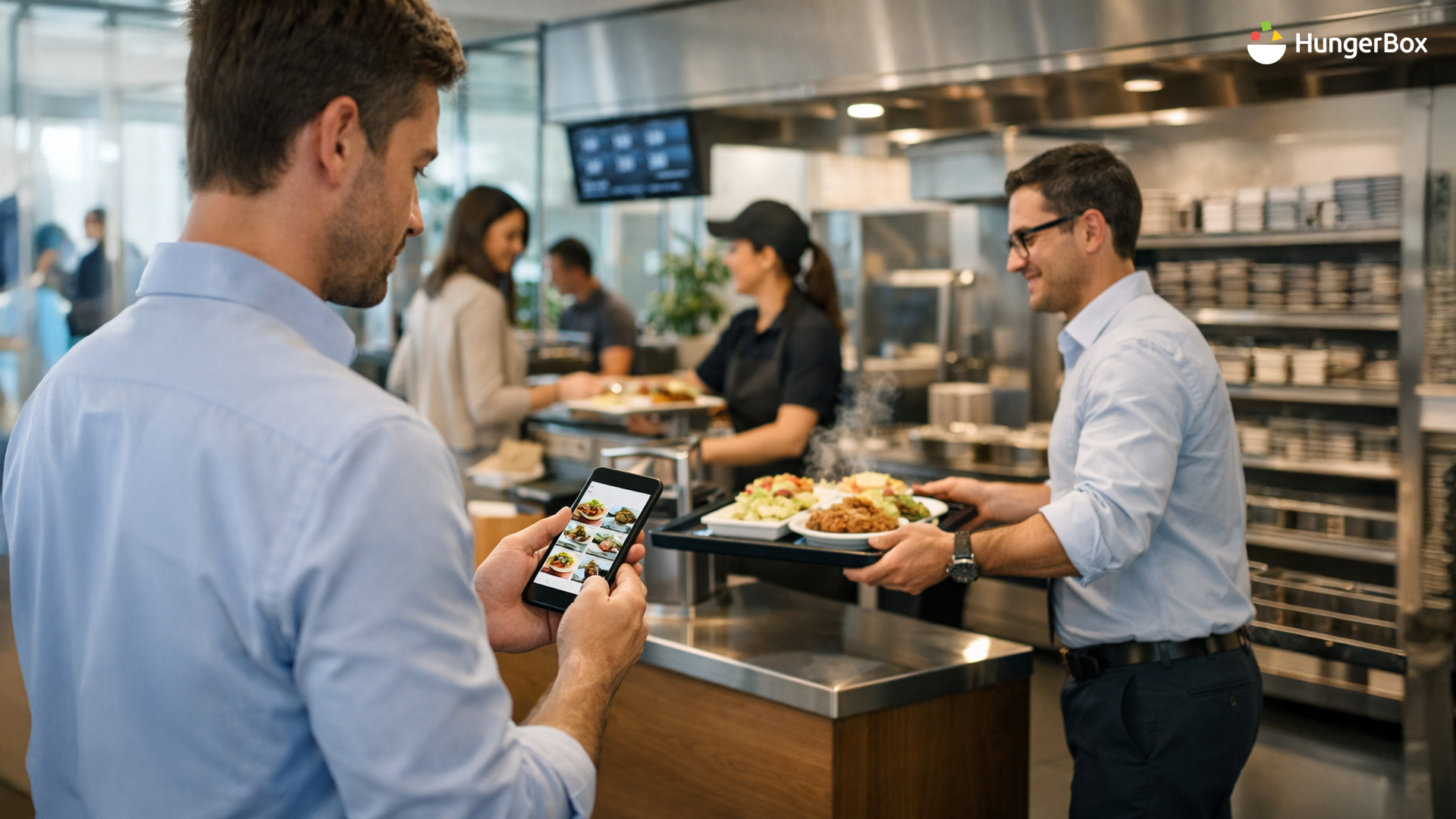
Why Corporate Cafeteria Companies Are Investing in Digitalization Cafeteria Solutions
Corporate workplaces are evolving rapidly. Employee expectations are higher, operational efficiency is critical, and companies are constantly searching for ways to improve workplace experience. One area seeing major transformation is the workplace cafeteria.
Today, Corporate Cafeteria Companies are investing heavily in digital cafeteria solutions to modernize food service operations, improve employee satisfaction, and reduce operational inefficiencies.
Traditional cafeteria systems often struggle with long queues, food wastage, billing errors, and poor vendor coordination. Digital solutions solve these issues by introducing technology-driven systems that streamline every part of cafeteria management.
Platforms like HungerBox are helping enterprises move toward smart, data-driven cafeteria operations that improve both employee experience and administrative control.
In this blog, we will explore why Corporate Cafeteria Companies are adopting digital solutions and how this transformation benefits organizations, employees, and facility managers.
The Growing Need for Digital Transformation in Corporate Cafeterias
Corporate cafeterias serve hundreds or even thousands of employees daily. Managing food service at this scale using manual systems can lead to operational challenges.
Some common issues include:
- Long queues during peak hours
- Manual billing errors
- Limited visibility into food demand
- Difficulty managing multiple vendors
- High levels of food waste
Digital cafeteria platforms eliminate these problems by automating ordering, payments, vendor management, and reporting.
For Corporate Cafeteria Companies, digitization is no longer optional—it is becoming essential for efficiency and scalability.
How Digital Solutions Are Transforming Corporate Cafeterias
Contactless Ordering and Faster Service
Digital cafeteria platforms allow employees to browse menus, pre-order meals, and schedule pickup times using their smartphones.
Benefits include:
- Reduced waiting time
- Better crowd management
- Faster service during peak hours
- Improved employee satisfaction
Employees can order food directly from their desks and collect meals without standing in long queues.
This shift towards contactless and mobile-first dining experiences is one of the biggest reasons why Corporate Cafeteria Companies are investing in digital platforms.
Real-Time Data and Smart Decision Making
Modern cafeteria management systems provide powerful analytics dashboards that help companies track food consumption patterns.
With digital systems, organizations can monitor:
- Popular food items
- Peak dining hours
- Vendor performance
- Inventory consumption
- Food waste levels
These insights help facility managers make better decisions regarding menu planning, vendor management, and procurement.
Data-driven cafeteria operations significantly improve efficiency and cost control.
Better Vendor Management
Many corporate campuses operate multiple food vendors. Managing them manually often leads to inconsistencies in service quality and hygiene.
Digital cafeteria platforms help Corporate Cafeteria Companies:
- Track vendor performance
- Monitor service-level agreements (SLAs)
- Collect employee feedback
- Maintain hygiene compliance
This creates a transparent ecosystem where vendors are accountable for food quality and service standards.
Reduced Food Waste and Cost Optimization
Food waste is one of the biggest challenges in corporate cafeterias. Without accurate demand forecasting, vendors often prepare excess food.
Digital solutions help solve this by:
- Tracking daily food consumption
- Predicting demand based on attendance trends
- Adjusting meal preparation in real time
By aligning food production with actual demand, companies can significantly reduce waste and lower operational costs.
For organizations focusing on sustainability goals, this is a major advantage.
Improved Employee Experience
Employees today expect convenience, personalization, and transparency in workplace services—including dining.
Digital cafeteria platforms provide:
- Live menus with ingredients and calorie details
- Personalized meal recommendations
- Dietary filters (vegan, gluten-free, low-calorie)
- Real-time feedback options
This creates a modern dining experience that improves workplace satisfaction and supports employee wellness initiatives.
A better cafeteria experience also contributes to stronger employee engagement and retention.
Integration with Corporate Systems
One of the biggest advantages of digital cafeteria platforms is their ability to integrate with existing enterprise systems.
Modern cafeteria solutions can connect with:
- HRMS platforms
- Access cards and employee IDs
- Payroll systems
- Corporate wellness programs
This integration enables features such as:
- Automated meal subsidies
- Employee meal tracking
- Wellness-based food incentives
For Corporate Cafeteria Companies, this creates a fully connected and automated dining ecosystem.
The Role of Technology in the Future of Corporate Dining
Digitalization is reshaping the way organizations manage workplace food services.
Some emerging trends include:
AI-based meal forecasting
- Artificial intelligence helps predict meal demand based on attendance, historical data, and weather patterns.
Smart queue management
- Slot-based meal scheduling helps avoid overcrowding during lunch hours.
Personalized dining experiences
- Employees receive customized food suggestions based on dietary preferences.
Sustainability reporting
- Digital platforms track food waste and packaging usage to support ESG initiatives.
These innovations are transforming corporate cafeterias into smart workplace dining ecosystems.
Why Corporate Cafeteria Companies Must Digitize Now
Companies that continue to rely on manual cafeteria systems will face growing operational challenges.
Digital cafeteria management offers clear benefits:
- Faster food service
- Better cost control
- Improved employee satisfaction
- Reduced food waste
- Stronger vendor accountability
- Data-driven decision making
Organizations that adopt digital solutions today will be better prepared to manage large-scale food operations efficiently.
Transform Your Workplace Dining Experience
If your organization is looking to modernize its food services, adopting a digital cafeteria platform is the smartest move.
HungerBox offers advanced solutions for Corporate Cafeteria Management, helping companies streamline operations and deliver a better dining experience for employees.
Explore Corporate Cafeteria Management:
Upgrade your workplace dining experience with a smart, scalable, and efficient cafeteria management solution.
Frequestly Asked Questions

Corporate Cafeteria Companies are investing in digital platforms to improve efficiency, reduce food waste, streamline vendor management, and enhance employee dining experiences.
Digital cafeteria systems provide faster ordering, real-time analytics, automated billing, better vendor monitoring, and improved employee satisfaction
Digital platforms analyze food consumption patterns and predict demand, allowing vendors to prepare the right quantity of food and minimize waste.
Yes. Modern cafeteria platforms can integrate with HRMS systems, employee ID cards, payroll systems, and wellness programs to automate meal subsidies and employee tracking.
Organizations can partner with providers like HungerBox to deploy a complete Corporate Cafeteria Management platform that automates ordering, payments, vendor management, and reporting.