How Can Office Cafeteria Management Be Simplified with Technology
Office Cafeteria Management can be simplified with technology by automating food ordering, vendor coordination, inventory tracking, payments, and compliance through a single digital platform. Instead of manual processes, long queues, billing errors, and food wastage, companies can use a smart system to manage everything in real time.
Today’s workplaces are fast, hybrid, and data-driven. Employees expect quick service, digital payments, clear menu information, and healthy options. At the same time, facility managers and HR teams need better control over costs, hygiene standards, and vendor performance. Manual cafeteria operations can no longer keep up with these expectations.
This is where a Workplace cafeteria management system plays a critical role. By using a Digital cafeteria management system, companies can streamline food operations, reduce waste, and improve employee satisfaction — all while gaining full visibility into spending and performance.
If your organization is looking to modernize its food operations, explore HungerBox’s solution for Office Cafeteria Management here
Want to see how it works for your campus?
Contact us or Schedule a demo today to transform your workplace dining experience.
Why Traditional Office Cafeteria Management Is Challenging
Manual Processes Create Delays
In many offices, cafeteria operations still depend on paper tokens, manual billing, and physical queues. This slows down service and reduces employee productivity.
Limited Visibility for Admin Teams
Without a Corporate food service management platform, it is difficult to track:
- Daily meal consumption
- Vendor performance
- Food wastage
- Subsidy usage
- Hygiene compliance
This lack of visibility often leads to higher costs and operational confusion.
Poor Inventory and Vendor Control
Manual Office cafeteria inventory management results in overproduction or shortages. Vendor coordination also becomes complex when multiple food partners operate in one campus.
How Technology Simplifies Office Cafeteria Management
1. End-to-End Automation with a Digital Platform
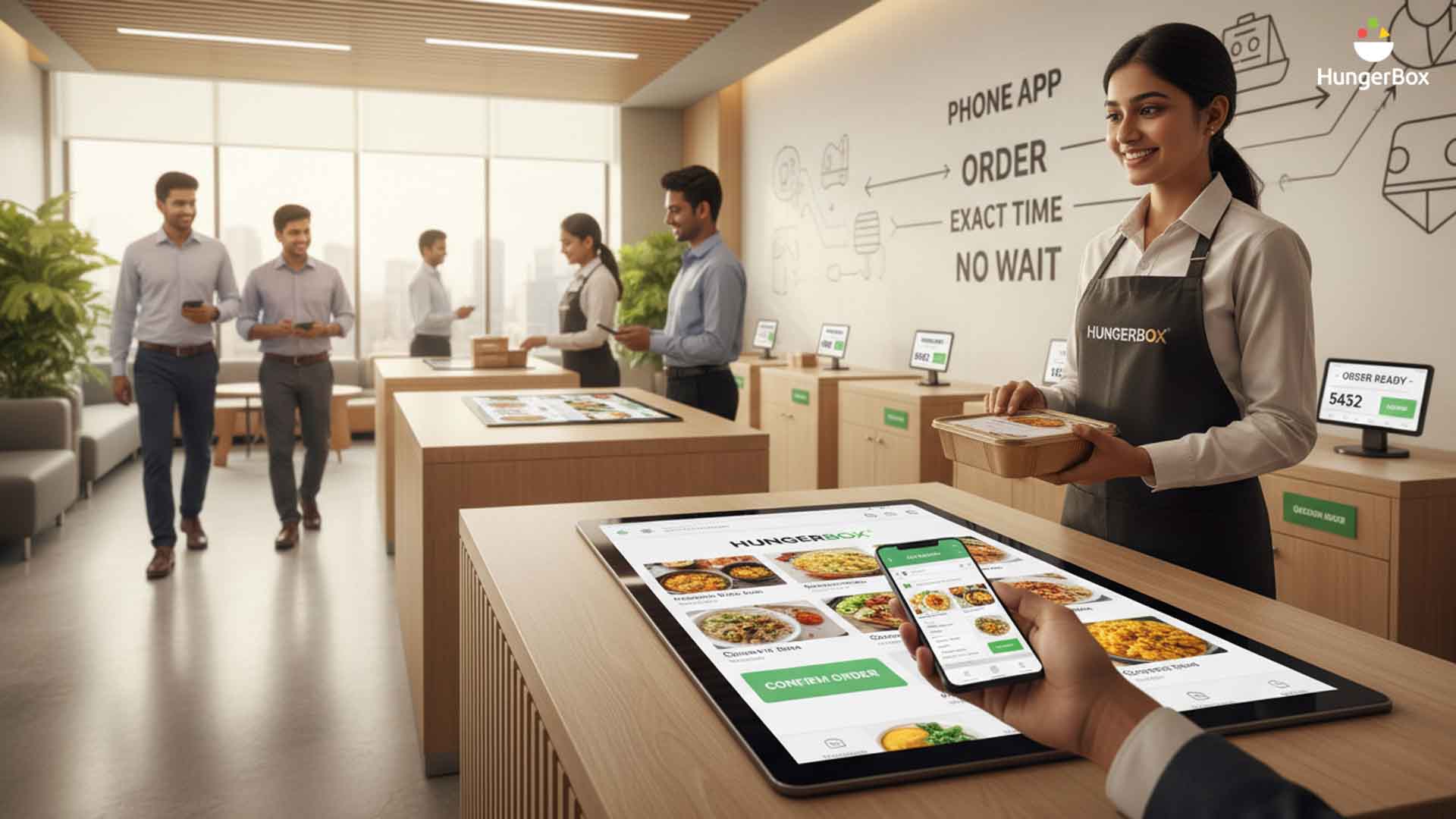
A modern Office canteen automation platform replaces manual processes with digital workflows. Employees can:
- View live menus
- Pre-order meals
- Select pickup slots
- Pay digitally
- Share instant feedback
For admin teams, a Cafeteria management software for enterprises provides centralized control across locations.
This makes Workplace food operations management structured, measurable, and easy to scale.
2. Better Vendor Management and Accountability
With Corporate cafeteria vendor management tools, companies can:
- Track vendor performance
- Monitor service time
- Review hygiene ratings
- Compare sales reports
- Enforce SLAs
Instead of reacting to complaints, managers can proactively improve service using real-time data.
This ensures consistent quality across all counters.
3. Smarter Inventory and Waste Reduction
Food waste is one of the biggest cost leakages in traditional cafeterias.
A Digital cafeteria management system helps by:
- Tracking consumption trends
- Forecasting demand based on attendance
- Alerting vendors about stock levels
- Reducing overproduction
With automated Office cafeteria inventory management, organizations reduce costs and support sustainability goals.
4. Improved Employee Dining Experience
Modern employees expect convenience similar to food delivery apps. A Smart cafeteria software for offices delivers that experience inside the workplace.
Employees benefit from:
- Shorter wait times
- Contactless payments
- Calorie and allergen information
- Personalized meal suggestions
- Easy subsidy application
These Employee dining management solutions improve satisfaction and reduce frustration during peak hours.
When cafeteria experience improves, overall workplace morale improves too.
5. Real-Time Data for Better Decisions
One of the biggest advantages of technology is access to analytics.
With a centralized dashboard, companies can track:
- Cost per meal
- Peak dining hours
- Popular menu items
- Vendor ratings
- Subsidy usage trends
This transforms Corporate food service management from a basic support function into a strategic decision-making tool.
Data-driven insights help reduce expenses and optimize food programs across multiple locations.
Technology Makes Office Cafeteria Management Scalable
As companies grow, managing cafeterias across different cities becomes complex. A cloud-based Workplace cafeteria management system ensures:
- Centralized reporting
- Standardized vendor processes
- Uniform hygiene checks
- Easy rollout in new offices
Whether you manage 500 or 20,000 employees, the system adapts without increasing operational complexity.
Security and Compliance Made Simple
Modern Cafeteria management software for enterprises also supports:
- Digital hygiene logs
- Audit-ready reports
- Role-based access control
- Secure payment integration
This reduces compliance risks and ensures transparency in daily operations.
Why Businesses Are Moving to Smart Office Cafeteria Management
Companies are realizing that cafeterias are not just service areas. They impact:
- Employee satisfaction
- Productivity
- Operational costs
- Sustainability goals
- Employer branding
By implementing a Smart cafeteria software for offices, businesses simplify operations while improving the dining experience.
If you’re ready to upgrade your Office Cafeteria Management, visit
Have questions?
Contact us today or Schedule a demo to see how technology can simplify your cafeteria operations.
Frequestly Asked Questions

Technology automates ordering, billing, vendor tracking, and inventory management, reducing errors and improving efficiency.
It is a digital platform that manages end-to-end cafeteria operations including menus, payments, vendors, and analytics.
Yes. With real-time data and forecasting tools, companies can reduce overproduction and improve inventory planning.
Absolutely. Cafeteria management software for enterprises is designed to handle multiple vendors, locations, and large employee volumes.
You can start by evaluating your current cafeteria challenges and then partnering with a provider like HungerBox. Contact the team or schedule a demo to understand the deployment process.