Why Is Office Cafeteria Management Still a Challenge for Companies?
Office Cafeteria Management is still a major challenge for companies because managing food service at scale is far more complex than it looks. From long queues and food waste to vendor disputes and rising costs, workplace dining often becomes a daily struggle for facility managers and HR teams.
Many companies still rely on manual systems or outdated processes. This leads to billing errors, poor hygiene tracking, lack of transparency, and employee dissatisfaction. In hybrid workplaces, unpredictable attendance makes planning even harder. When food operations are not aligned with real-time data, businesses lose money and employee trust.
The good news? These challenges can be solved with the right digital approach. Modern Corporate Cafeteria Management Software and Digital Cafeteria Solutions for Offices help companies automate operations, manage vendors, reduce waste, and improve employee experience.
If your organization is facing issues with Workplace Food Service Management, it’s time to upgrade your cafeteria strategy. Explore HungerBox’s smart solution for corporates here:
Want to see how it works? Contact us or Schedule demo today and simplify your office dining operations.
Why Office Cafeteria Management Is More Complex Than It Seems
Managing a corporate cafeteria is not just about serving food. It involves multiple moving parts:
- Vendor coordination
- Inventory tracking
- Billing and subsidies
- Hygiene compliance
- Employee satisfaction
- Waste control
Without a proper Corporate Dining Management System, these processes become manual and difficult to monitor.
Unpredictable Employee Footfall
In hybrid workplaces, daily attendance changes constantly. This makes Smart Cafeteria Management for Hybrid Workplaces essential. When companies cannot predict how many employees will dine, they either overproduce food or run out during peak hours.
Both situations increase costs and frustration.
Vendor Management Issues
Most companies work with multiple food vendors. Without a proper Cafeteria Vendor Management Platform, tracking vendor performance, hygiene standards, and SLA compliance becomes difficult. Disputes over billing and food quality are common.
Common Challenges in Workplace Food Service Management
Let’s look at the biggest pain points companies face in Office Cafeteria Management.
Long Queues and Poor Experience
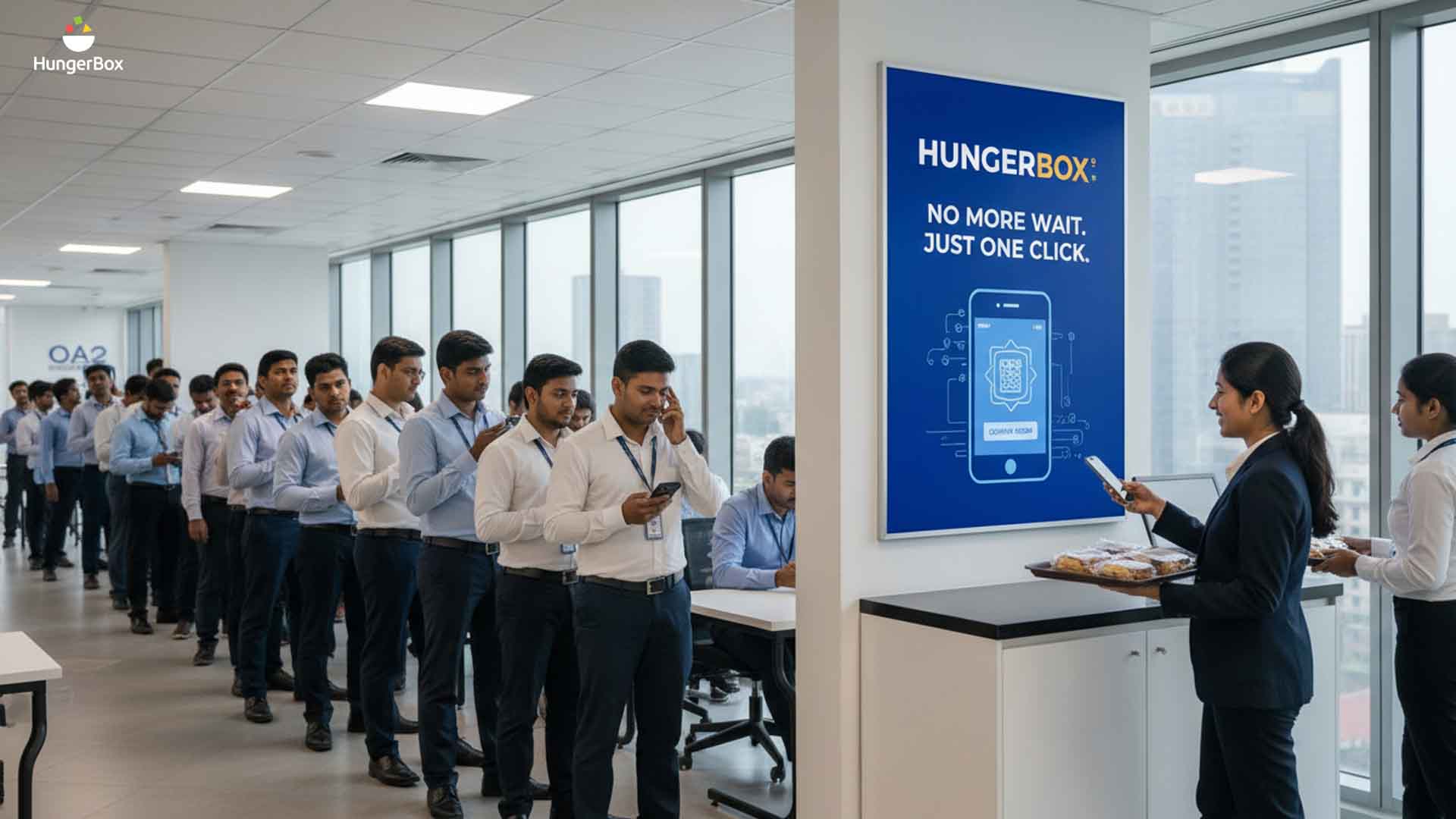
Manual ordering systems slow down service. Employees waste valuable time standing in line. An integrated Office Food Ordering Software allows pre-ordering and scheduled pickups, reducing congestion and improving productivity.
Food Waste and Inventory Loss
Without proper Cafeteria Inventory Management for Businesses, kitchens rely on guesswork. Over-preparation leads to food waste, while under-preparation causes shortages.
Digital tracking helps monitor consumption trends and forecast demand accurately.
Lack of Cost Transparency
Companies often struggle to track:
- Cost per meal
- Department-wise consumption
- Subsidy usage
- Vendor billing accuracy
An Employee Meal Management System provides real-time reporting and financial control.
Hygiene and Compliance Gaps
Food safety is critical. Manual inspections are not enough. A structured Workplace Cafeteria Automation Solutions system ensures digital hygiene logs, vendor audits, and traceable food handling processes.
How Digital Solutions Solve Office Cafeteria Management Challenges
Technology is transforming workplace dining. A modern Corporate Cafeteria Management Software brings everything under one dashboard.
Centralized Control
A digital system allows companies to:
- Monitor vendors
- Track inventory
- View real-time reports
- Manage multiple locations
This creates structured and efficient Workplace Food Service Management.
Data-Driven Decisions
Using analytics, companies can:
- Identify popular meals
- Reduce waste
- Optimize vendor contracts
- Plan better for hybrid schedules
A strong Corporate Dining Management System turns cafeteria operations into a measurable business function.
Better Employee Experience
Digital Cafeteria Solutions for Offices improve daily experience by offering:
- Live menus
- Pre-ordering options
- Contactless payments
- Feedback systems
Employees feel valued when dining becomes smooth and predictable.
Why Companies Delay Modernization
Despite clear benefits, many organizations delay upgrading their Office Cafeteria Management because they:
- Assume manual systems are manageable
- Fear implementation costs
- Worry about employee adoption
However, the hidden costs of inefficiency are much higher than the cost of automation.
Lost productivity, food waste, vendor disputes, and employee dissatisfaction add up quickly.
The Future of Office Cafeteria Management
Modern companies are shifting toward:
- Smart Cafeteria Management for Hybrid Workplaces
- Automated inventory tracking
- Real-time analytics dashboards
- Integrated Employee Meal Mhttps://www.hungerbox.ai/contact-us/anagement Systems
Workplace Cafeteria Automation Solutions are no longer optional. They are becoming essential for cost control and employee engagement.
If your organization wants to move from manual chaos to structured control, Explore HungerBox’s corporate solution:
Ready to modernize your workplace dining?
Contact us or Schedule demo today and see the difference.
Frequestly Asked Questions

Because it involves vendor coordination, inventory control, billing accuracy, and employee satisfaction, all at scale. Manual systems make it harder to manage efficiently.
It uses data analytics and attendance forecasting to prepare the right quantity of meals and track consumption trends.
It helps companies monitor meal usage, control subsidies, generate reports, and improve financial transparency.
It allows pre-ordering, scheduled pickup, and digital payments, reducing waiting time and improving convenience.
Yes. It helps forecast attendance-based demand, manage slot bookings, and prevent overcrowding in hybrid office environments.