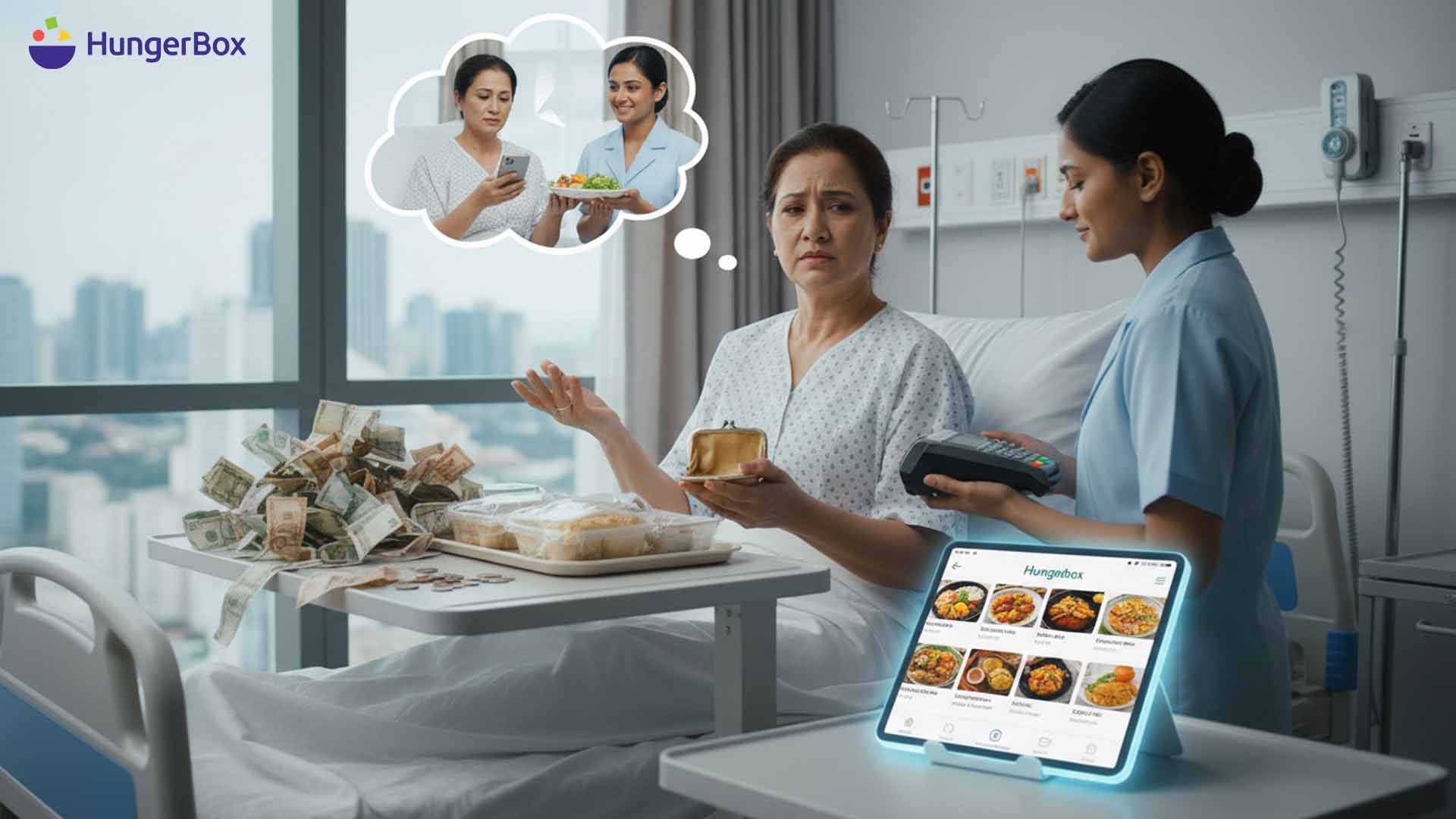
Are Cash-Dependent Hospital Meal Payments Hurting Patient Experience—and What’s the Smarter Alternative?
Hospital stays are already overwhelming for patients and attendants. Between managing treatments, medicines, and constant monitoring, the last thing families should struggle with is paying for meals. Yet, in many hospitals, limited payment options and dependency on cash continue to create daily frustration.
From searching for exact change to walking to billing counters multiple times a day, cash-heavy food payment systems are inconvenient, slow, and outdated. In emergency or restricted-movement situations, cash dependency becomes even more challenging.
Healthcare has embraced digital transformation across diagnostics, patient records, and pharmacy systems—but hospital dining payments still remain stuck in the past.
This blog explains how cash dependency affects patient experience and how hospitals can adopt smarter, digital-first food payment systems that simplify mealtimes for every patient and family.
Why Cash-Dependent Payments Are a Major Pain Point
No Flexibility for Patients and Attendants
Not every attendant carries cash at all times. Hospital stays are unpredictable, and patients often come unprepared. Cash-only payment systems mean:
- Delays in ordering meals
- Need to leave the room just to withdraw cash
- Difficulty managing daily food expenses
For bedridden patients or those with mobility challenges, this becomes a major inconvenience.
Long Queues at Cafeteria Billing Counters
Cash-based billing results in:
- Slow checkouts
- Manual receipt handling
- Frequent disputes over incorrect change
This causes crowding—something hospitals must avoid for safety and hygiene.
No Transparency in Daily Food Spending
With cash transactions, patients receive limited documentation. This creates:
- Poor visibility into daily expenses
- Difficulty tracking spending limits
- Confusion during discharge billing
Families already facing stress shouldn’t have to calculate food costs manually.
High Dependency on Staff for Manual Billing
When payments depend on cash counters, patients and attendants need to:
- Walk to cafeterias
- Request nurses for help
- Wait for staff availability
This pulls staff away from critical medical responsibilities.
Hygiene Concerns
Cash passes through many hands, increasing the risk of contamination. For hospitals, reducing physical touchpoints is essential.
Why Hospitals Must Move Beyond Cash Payments
A modern hospital experience requires:
- Convenience
- Transparency
- Safety
- Speed
But limited payment options and dependency on cash do not support these goals. Digital payments are now the default expectation for patients and attendants.
Better Efficiency
Digital transactions reduce billing time drastically.
More Control for Families
Attendants can manage food orders without leaving the patient.
Seamless Integration with Hospital Systems
Digital payments can be linked with:
- Patient ID
- Room number
- Meal plans
Accountability and Audit Trail
Every order is recorded digitally for hospital administration.
The Smarter Alternative: HungerBox Digital Payment Ecosystem for Hospitals
HungerBox introduces a complete, cashless solution built exclusively for hospital dining.
Multiple Digital Payment Methods
Patients and attendants can pay using:
- UPI
- Debit/credit cards
- Prepaid cards
- Hospital-linked wallet
This flexibility eliminates the need to carry cash at all.
Integrated Payment Flow Inside the Ordering App
The HungerBox ordering interface allows:
- Browsing the live menu
- Selecting meals
- Paying instantly using preferred digital options
Everything happens in one seamless, user-friendly app.
Faster Checkout and Zero Physical Touchpoints
No queues. No handling cash. No waiting for receipts.
Transparent Billing and Real-Time Order History
Families can track:
- All past orders
- Live order status
- Total spending
- Meal delivery timelines
This improves trust and eliminates confusion.
Integration With Room-Service Ordering
Digital payments work smoothly with HungerBox’s Room Service Module, allowing:
- QR-based ordering
- Phone-based ordering linked to patient accounts
- Digital receipts for every meal
Explore hospital dining digitization:
How Digital Payments Improve Hospital Dining Experience
Convenience for Patients
Patients who cannot move or are bedridden can still order food independently through digital payments.
Convenience for Attendants
No more rushing to ATMs or worrying about small change.
Faster Service
Digital payments speed up meal ordering, preparation, and delivery.
Better Financial Control
Digital wallets allow families to:
- Preload balances
- Restrict overspending
- Track usage
Better Hygiene & Safety
Cashless systems reduce touchpoints and contamination risks.
Benefits for Hospitals
Reduced Billing Errors
- Digital systems auto-calculate totals with zero manual error.
Lower Operational Costs
- Fewer staff required for handling payments.
Higher Patient Satisfaction
- Faster service + transparent billing = improved experience.
Centralized Reporting
Hospitals get access to audit-ready dashboards showing:
- Total transactions
- Popular meals
- Revenue summaries
- Performance metrics
Smooth Discharge Billing
- Meal payments are documented digitally and can be integrated into discharge processes
Why Patients Prefer Digital Food Payments
Ease of Use
- Just a tap or scan.
Speed
- Instant checkout.
Accuracy
- Clear pricing and automated billing.
Predictability
- No hidden charges.
Comfort
- Meals can be ordered without leaving the room.
Final Thoughts
Hospital dining should be simple, transparent, and stress-free. However, limited payment options and dependency on cash make meal ordering slow, inconvenient, and error-prone for patients and attendants.
With HungerBox’s digital payment ecosystem, hospitals can:
- Offer multiple payment modes
- Enable cashless room-service ordering
- Improve billing accuracy
- Strengthen patient experience
Digital payments are no longer optional—they’re essential to modern healthcare.
Move Your Hospital to Cashless Dining
Frequestly Asked Questions

Cash-dependent systems make it difficult for patients and attendants to order meals conveniently. They must leave the room to withdraw cash, wait in queues, or rely on staff, which increases stress and delays in getting food—especially during emergencies or restricted-mobility situations.
Cash-based systems slow down checkout, create hygiene risks, cause billing errors, and offer no digital record of spending. With patients expecting seamless digital experiences, relying solely on cash leads to inconvenience and poor satisfaction.
Hospitals can adopt multiple cashless payment methods such as UPI, debit/credit cards, prepaid food cards, and hospital-linked wallets. HungerBox integrates all these options directly into a single ordering app, making payments instant and convenient.
Digital wallets and online payment records allow attendants to track daily food spending, maintain budgets, preload balances, and access receipts instantly. This transparency eliminates confusion during discharge billing and improves financial control.
HungerBox offers a cashless, app-based ordering system with multiple digital payment options. The platform enables patients to view menus, place orders, pay instantly, track delivery status, and access receipts—all without leaving their room. This improves convenience, hygiene, speed, and overall hospital dining experience.