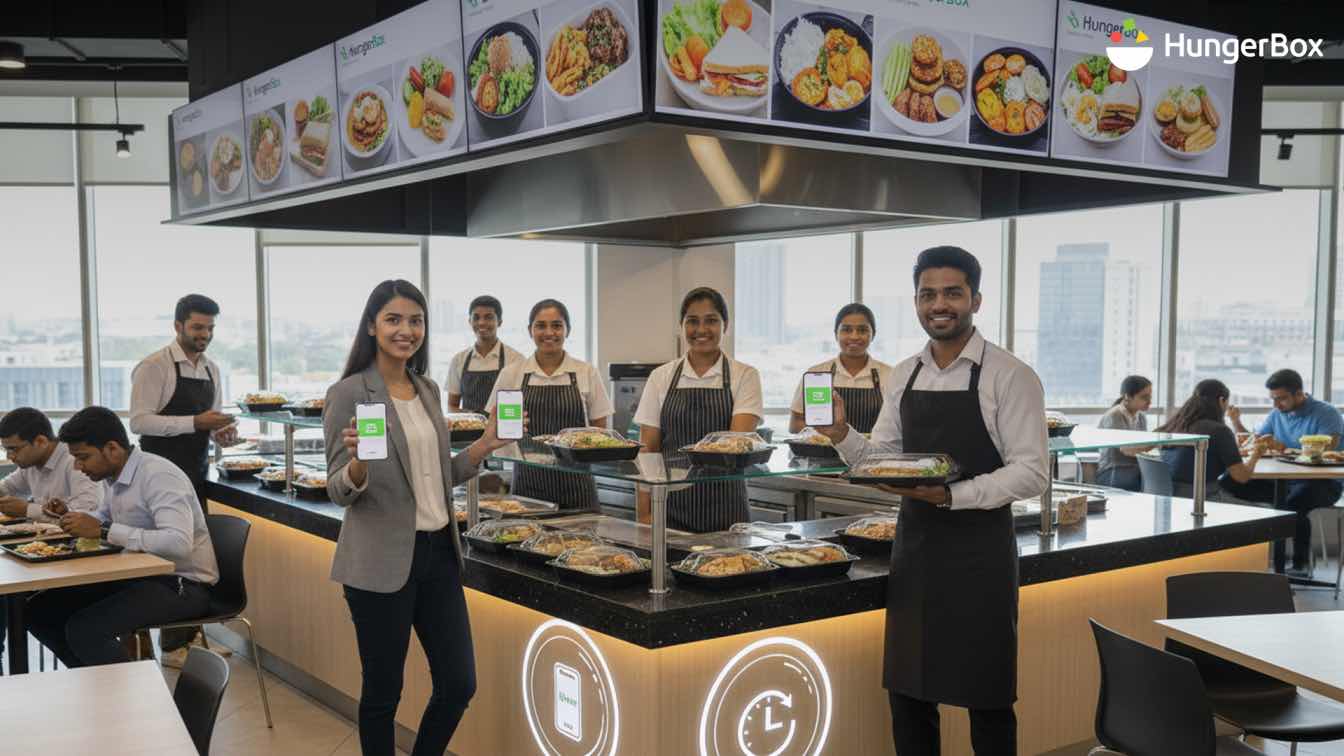
Are Your Employee Food Services Meeting Modern Workplace Needs?
Employee expectations have changed. Workplaces have changed. But have your Employee Food Services kept up?
Today’s workforce looks at food not just as a meal, but as part of their overall workplace experience. Employees want convenience, healthy choices, speed, hygiene, and flexibility. For HR and facility leaders, this means food service is no longer just an operational task. It is a strategic function.
If your cafeteria still runs on manual processes, fixed menus, and long queues, it may be time to rethink your approach.
Why Employee Food Services Matter More Than Ever
Modern workplaces are built around experience. From flexible hours to wellness programs, everything is designed to improve employee satisfaction. Employee Food Services play a big role in that experience.
When food service is efficient and well managed, employees:
- Save time during breaks
- Eat healthier
- Feel valued by the organization
- Stay more productive
But when food systems are slow or unorganized, frustration builds quickly.
That’s why many enterprises are now investing in Corporate cafeteria management solutions to modernize their food operations.
The Shift from Traditional Cafeterias to Smart Food Systems
In the past, cafeterias were simple. Fixed menus. Manual billing. Paper coupons. Limited tracking.
Today, companies are moving towards digital-first Workplace food service management systems that bring transparency and control.
With the right setup, organizations can:
- Track daily meal consumption
- Monitor vendor performance
- Reduce food waste
- Improve hygiene compliance
- Offer personalized meal options
This shift is powered by technology-driven systems like Enterprise meal management software and an Employee cafeteria automation system that simplify operations for both employees and administrators.
Are Your Office Catering Services Meeting Hybrid Needs?
Hybrid work has changed dining patterns. Some days have full attendance. Some days are half empty. Without proper forecasting, this leads to:
- Overproduction of meals
- Food wastage
- Extra costs
- Poor planning
Modern Hybrid workplace meal solutions use data to predict demand based on attendance patterns. This helps companies align food preparation with actual needs.
Instead of guessing, your team can make data-driven decisions.
Key Signs Your Employee Food Services Need an Upgrade
Long Queues During Lunch Hours
Employees spending 15–20 minutes in line is lost productivity. An Employee cafeteria automation system allows pre-ordering and slot-based pickups, reducing waiting time.
No Visibility into Food Costs
Without reporting tools, it is hard to track cost per meal or subsidy leakage. An Employee meal subsidy management platform gives full visibility into spending and ensures accurate billing.
Poor Vendor Accountability
If vendor performance is tracked manually, errors are common. A structured Managed food services for corporate offices approach ensures vendors are monitored through digital dashboards.
Limited Menu Transparency
Today’s employees expect nutritional information and allergen details. A strong corporate food service technology platform allows digital menus with filters for dietary needs
What Modern Workplace Dining Should Look Like
The best Workplace dining solutions provider offers more than just food ordering. It provides an integrated system that connects employees, vendors, and facility teams on one platform.
Here’s what modern Employee Food Services should include:
Digital Ordering and Payments
Employees browse menus, pre-order meals, and pay digitally without cash handling.
Real-Time Data and Reporting
Admins access dashboards showing meal counts, vendor ratings, and cost reports.
Vendor Performance Tracking
Service quality, hygiene ratings, and delivery timelines are monitored consistently.
Meal Subsidy Automation
An integrated Employee meal subsidy management platform ensures accurate benefit allocation without manual reconciliation.
Multi-Location Control
For enterprises operating across cities, centralized Corporate cafeteria management solutions ensure consistency.
Why Technology Is Essential for Workplace Food Service Management
Manual systems cannot handle the complexity of large organizations. A scalable Enterprise meal management software ensures:
- Seamless vendor coordination
- Automated billing
- Hygiene tracking
- Data-driven decision making
- Reduced food wastage
When food operations are automated, HR and admin teams spend less time on manual tasks and more time on strategy.
The Business Impact of Smarter Employee Food Services
Investing in structured Workplace food service management brings measurable benefits:
- Reduced operational costs
- Better employee satisfaction scores
- Improved compliance
- Lower food wastage
- Higher workplace engagement
Food is one of the most used employee benefits. When managed properly, it becomes a tool for retention and employer branding.
Is It Time to Rethink Your Employee Food Services?
If your current system relies on spreadsheets, paper tokens, or manual billing, it may not meet modern expectations.
The right Managed food services for corporate offices approach can transform your cafeteria into a strategic advantage.
Whether you operate one campus or multiple locations, a reliable Workplace dining solutions provider can help you modernize without disrupting daily operations.
Modern Employee Food Services require visibility, automation, and flexibility. The sooner you upgrade, the faster you unlock cost savings and employee satisfaction.
CONTACT US to understand how your workplace dining can improve.
SCHEDULE DEMO to see how HungerBox simplifies corporate food service management.
Your employees deserve better dining experiences. Your organization deserves better control.
Frequestly Asked Questions

Employee Food Services refer to organized meal programs provided within workplaces. These include cafeteria operations, office catering services for employees, subsidy management, and digital meal ordering systems.
Corporate cafeteria management solutions improve operational efficiency, reduce food waste, ensure vendor accountability, and enhance employee experience through automation and real-time data tracking.
An employee cafeteria automation system reduces manual errors, tracks subsidies accurately, predicts meal demand, and minimizes overproduction, leading to lower overall food service costs.
Yes. Enterprise meal management software supports hybrid workplace meal solutions by forecasting attendance-based demand, enabling pre-orders, and adjusting food preparation accordingly.
Workplace dining solutions improve satisfaction by offering faster service, digital ordering, dietary transparency, hygienic operations, and personalized meal options aligned with employee needs.