What Causes Delays in Patient Meal Delivery—And How Can Hospitals Streamline Dietician Approvals and Room Service?
For patients and attendants, hospital stays are physically and emotionally demanding. Amid treatments, diagnostics, and recovery schedules, meal delivery should be effortless. Yet in many hospitals, patients experience frequent delays, wrong diets, and miscommunication because the entire workflow of patient meal request, dietician approval, and delivery to room is fragmented.
A meal that should take 20–30 minutes may get delayed due to missing approvals, unclear communication between teams, or lost instructions. For patients who must eat according to strict medical timings, these delays can affect comfort, nutrition, and even recovery outcomes.
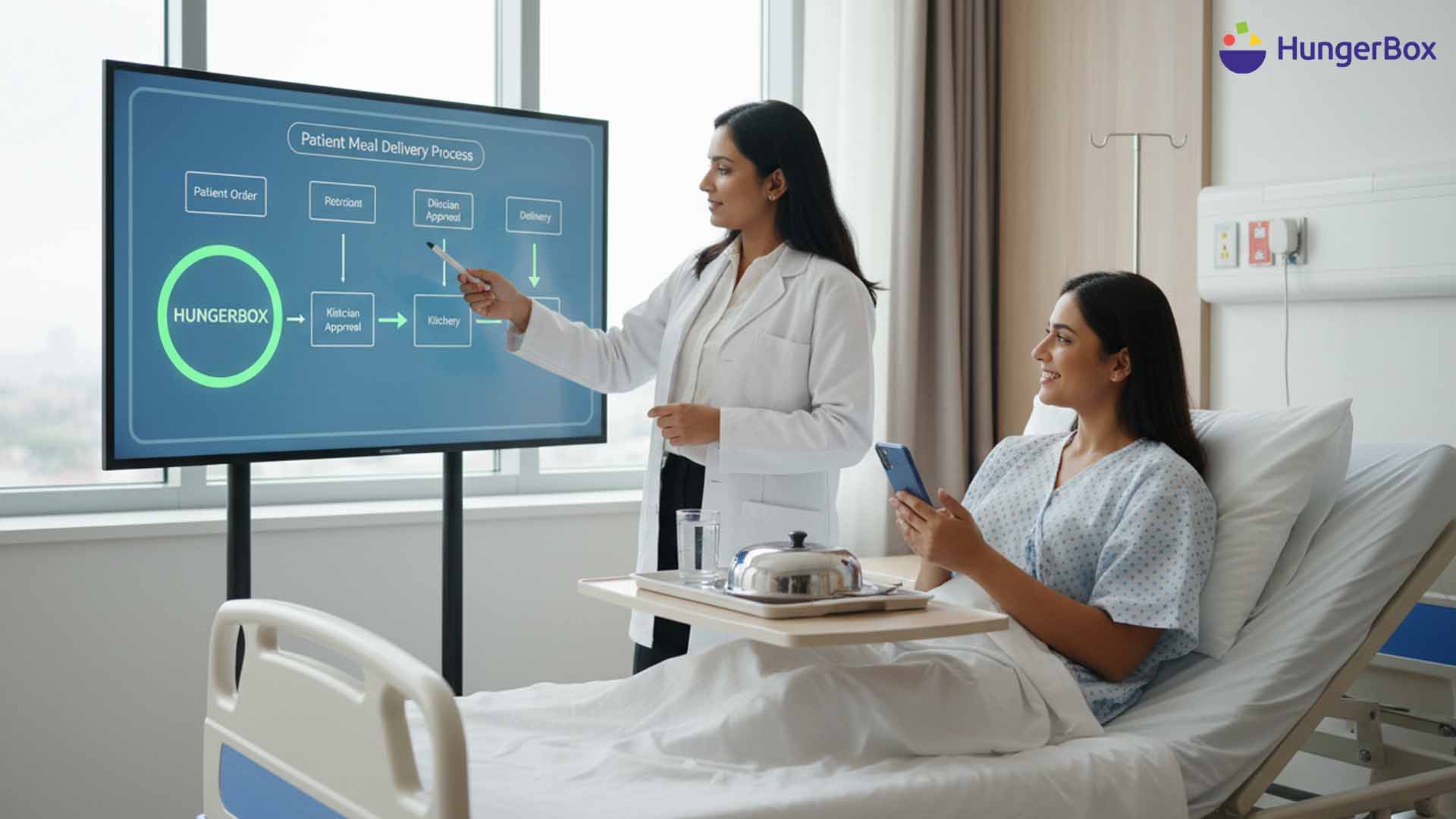
Modern hospitals are investing heavily in medical technology, but dining operations are often left behind. Fortunately, digital cafeteria platforms like HungerBox now offer an end-to-end workflow that integrates ordering, dietician approvals, kitchen operations, and room-service delivery.
This blog explains the root causes of delays and how hospitals can create a seamless, transparent, and patient-friendly dining ecosystem.
Why Patient Meal Delivery Gets Delayed in Most Hospitals
Disconnected Workflow Between Request, Approval, and Delivery
A typical hospital meal journey involves three critical steps:
- Patient or attendant places a meal request
- Dietician reviews and approves the meal
- Delivery staff brings the meal to the patient’s room
However, in traditional systems, these steps are managed separately through:
- Phone calls
- Paper slips
- Verbal notes
- Manual coordination between nurses, dieticians, and kitchen staff
With no unified platform, delays become inevitable.
Manual Dietician Approvals Slow Down the Process
Dieticians must ensure meals follow:
- Medical nutrition plans
- Allergen restrictions
- Soft or liquid diet requirements
- Low-sodium or diabetic-safe guidelines
When approvals rely on manual review or physical paperwork, kitchens often wait without clarity—resulting in slower meal cycles and unpredictable delivery times.
No Visibility for Patients or Attendants
Patients don’t know:
- Whether their meal request is accepted
- If dieticians have approved it
- When the kitchen starts preparing their meal
- When the delivery team is on the way
This creates stress and repeated follow-up calls.
Miscommunication Across Teams
Without digital coordination, the smallest communication gap leads to:
- Wrong diet delivered
- Duplicate orders
- Missed requests
- Meals reaching the wrong room
These mistakes reduce patient trust and satisfaction.
Manual Delivery Tracking Causes Delays
Delivery staff often rely on:
- Paper lists
- Room-wise notes
- Verbal instructions
This leads to missed deliveries and slow service.
Why Hospitals Must Modernize Meal-Delivery Workflows
Timely Nutrition Affects Recovery
Patients on medication cycles or therapeutic diets need food on time. Delayed meals can disrupt:
- Blood sugar management
- Post-surgery nutrition
- Recovery timelines
Reduced Nurse Workload
Nurses frequently act as mediators in meal requests. A digital workflow removes this burden.
Higher Patient Satisfaction Scores
Faster, accurate, and predictable meal service directly improves hospital ratings.
Higher Patient Satisfaction Scores
Faster, accurate, and predictable meal service directly improves hospital ratings.
Smoother Internal Operations
Unified communication improves efficiency among dieticians, kitchen teams, and housekeeping staff.
The Solution: HungerBox End-to-End Digital Meal Workflow
HungerBox offers a complete solution that connects the entire chain of patient meal request, dietician approval, and delivery to room—making the process seamless, trackable, and error-free.
Step 1: Digital Meal Ordering From Patient or Attendant
Patients or attendants can initiate meal requests via:
- QR code placed near the bed
- In-room tablets
- HungerBox mobile app
- Phone-based ordering for patients without digital access
The moment a request is placed, it enters a centralized system.
Step 2: Real-Time Dietician Approval Inside the Kitchen Management System
Dieticians receive requests instantly and can:
- Approve meals
- Suggest alternatives
- Block restricted items
- Customize meals based on medical needs
This ensures every meal is medically safe and compliant.
Step 3: Seamless Kitchen Workflow Integration
Once approved:
- The kitchen receives the order with exact recipe details
- Preparation status is updated in real time
- Staff follow standard portions to maintain consistency
- No manual slips. No misinterpretation.
Step 4: Accurate, Trackable Room Delivery via Delivery App
Delivery staff get:
- Room number
- Patient name
- Diet type
- Estimated time
- Delivery checklist
Using the Delivery App, they update statuses like:
- Picked from kitchen
- Out for delivery
- Delivered to room
Patients gain full visibility, and hospitals gain accountability.
Step 5: Digital Records for Every Meal
Each order is logged with:
- Time of request
- Approval timestamp
- Preparation start and finish
- Delivery time
Explore how hospitals digitize meal workflows here
How Digital Integration Improves Patient & Attendant Experience
Transparency From Request to Delivery
- Patients can track every stage of their meal—reducing anxiety and dependency on staff.
Faster Meal Cycles
- Automated approvals and digital coordination eliminate delays.
Error-Free Diet Compliance
- Every meal is verified by dieticians before preparation
Predictable Mealtimes
- Patients know exactly when to expect their meals.
Easier Feedback Loop
- Patients can share meal ratings instantly, supporting quality improvements.
Additional Benefits for Hospitals
Better Coordination Among Teams
- Dieticians, kitchen staff, and delivery staff work within the same ecosystem.
Reduced Food Wastage
- The kitchen only prepares approved meals.
Performance Insights
Admin dashboards reveal:
- Average delivery times
- Approval bottlenecks
- Kitchen delays
- Peak-hour loads
Streamlined Audit & Compliance
- Digital logs support hospital accreditation and food safety audits.
Higher Patient Trust
- Consistent, timely meal service strengthens hospital brand perception.
Why Patients Prefer a Digital Dining Workflow
- Ease of Use: Ordering requires just a QR scan or taps.
- Personalization: Dieticians can tailor meals easily.
- Peace of Mind: Predictability removes uncertainty.
- Safety: Wrong-diet errors drop significantly.
- Comfort: Patients don't need to leave the room or make multiple calls.
Final Thoughts
Hospital dining should support recovery—not add stress. But delays caused by disconnected workflows between patient meal request, dietician approval, and delivery to room create frustration and inefficiency.
HungerBox solves this with an end-to-end digital flow that ensures:
- Faster meal cycles
- Accurate diet compliance
- Real-time visibility
- Seamless coordination between teams
For modern hospitals, upgrading to a digital meal-management system isn’t optional—it’s essential.
Streamline Hospital Meal Delivery Today
Frequestly Asked Questions

Delays usually occur because the steps—meal request, dietician approval, and delivery to room—are managed manually and handled by different teams. Without a unified digital workflow, approvals take longer, instructions get misplaced, and kitchens receive orders late.
A digital system sends meal requests instantly to dieticians through an integrated dashboard. Dieticians can review restrictions, approve meals in real time, and block unsafe items. This eliminates paperwork delays and ensures every patient receives a medically appropriate meal.
Yes. With platforms like HungerBox, hospitals can enable full tracking—from order placement to kitchen preparation to room delivery. Patients see status updates such as “approved,” “preparing,” and “out for delivery,” making the entire process transparent and predictable.
HungerBox’s end-to-end digital flow connects ordering, dietician approval, kitchen instructions, and delivery through one system. Every meal is validated for dietary safety, and delivery staff receive accurate digital task lists, reducing wrong diet deliveries and missed orders.
Hospitals experience faster meal cycles, fewer operational errors, better coordination among teams, reduced food wastage, stronger compliance records, and improved patient satisfaction scores. Digital logs also help in quality audits and staff accountability.